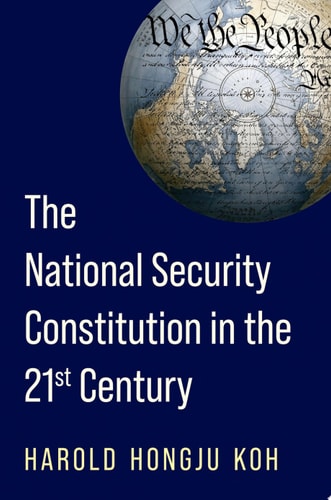
The National Security Constitution in the Twenty-First Century
0
0
As an Amazon Associate and affiliate partner, Menrva Books earns from qualifying purchases. Learn more
Author Description
A deeply researched, fully updated edition of The National Security Constitution that explores the growing imbalance of institutional powers in American foreign affairs and national security policy Since the beginning of the American Republic, a package of norms has evolved in the U.S. Constitution to protect the operation of checks and balances in national security policy. This "National Security Constitution" promotes shared powers and balanced institutional participation in foreign policymaking. Today it is under attack from a competing claim of executive unilateralism generated by recurrent patterns of presidential activism, congressional passivity, and judicial tolerance. This dynamic has pushed presidents of both parties to press the limits of law in foreign affairs. In his award-winning National Security Constitution (1990), Harold Hongju Koh traced the evolution of this constitutional struggle across America's history. This new book, based on the earlier volume but with roughly 70 percent new material, brings the story to the present, placing recent events into constitutional perspective. Reviewing the presidencies of the twenty-first century, he explains why modern national security threats have given presidents of both parties incentives to monopolize foreign policy decision-making, Congress incentives to defer, and the courts reasons to rubber-stamp. Koh suggests both a workable strategy and crucial prescriptions to restore the balance of our constitutional order in addressing modern global crises.
Menrva's Summary
THE THESIS
The National Security Constitution in the Twenty-First Century examines the evolving balance of power in American foreign affairs and national security policy. It investigates how the traditional constitutional framework, designed to ensure checks and balances, is being challenged by increasing executive unilateralism. The book analyzes the roles of the presidency, Congress, and the judiciary in this dynamic, highlighting how modern threats have incentivized presidents to centralize decision-making. Koh proposes strategies to restore constitutional equilibrium in addressing contemporary global crises.
THE SCOPE MAP
- Analysis of the historical evolution of the "National Security Constitution" and its norms.
- Examination of presidential activism, congressional passivity, and judicial tolerance in foreign affairs.
- Review of presidencies in the twenty-first century and their impact on institutional power.
- Explanation of incentives for presidents to monopolize foreign policy decision-making.
- Discussion of congressional deference and judicial rubber-stamping in national security matters.
- Prescriptions and a workable strategy to restore constitutional balance in addressing global crises.
THE AUTHORITY PERSPECTIVE
This updated edition of Harold Hongju Koh's seminal work is expected to be a significant contribution to the study of American constitutional law and foreign policy. Building on the award-winning 1990 volume, the new material brings the analysis up to the present day, incorporating recent events and presidencies. The book's focus on the imbalance of institutional powers and its proposed solutions are likely to be of interest to scholars, policymakers, and students of government. Its deep research and historical perspective provide a crucial framework for understanding contemporary national security challenges.
Page Count:
496
Publication Date:
2024-06-25
Publisher:
Yale University Press
ISBN-10:
0300253109
ISBN-13:
9780300253108
History
Non-Fiction
Politics
Law
Government
Community Tags
Similar Books