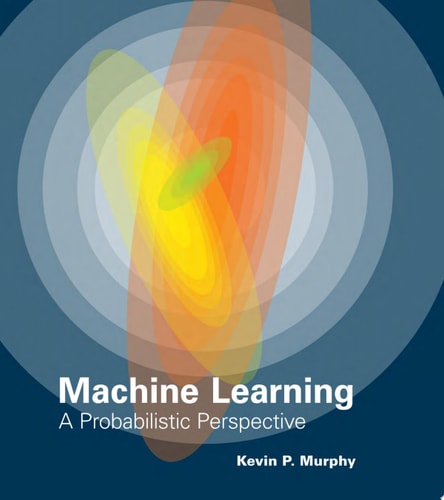
Machine Learning
0
0
As an Amazon Associate and affiliate partner, Menrva Books earns from qualifying purchases. Learn more
Author Description
A comprehensive introduction to machine learning that uses probabilistic models and inference as a unifying approach. Today's Web-enabled deluge of electronic data calls for automated methods of data analysis. Machine learning provides these, developing methods that can automatically detect patterns in data and then use the uncovered patterns to predict future data. This textbook offers a comprehensive and self-contained introduction to the field of machine learning, based on a unified, probabilistic approach. The coverage combines breadth and depth, offering necessary background material on such topics as probability, optimization, and linear algebra as well as discussion of recent developments in the field, including conditional random fields, L1 regularization, and deep learning. The book is written in an informal, accessible style, complete with pseudo-code for the most important algorithms. All topics are copiously illustrated with color images and worked examples drawn from such application domains as biology, text processing, computer vision, and robotics. Rather than providing a cookbook of different heuristic methods, the book stresses a principled model-based approach, often using the language of graphical models to specify models in a concise and intuitive way. Almost all the models described have been implemented in a MATLAB software package—PMTK (probabilistic modeling toolkit)—that is freely available online. The book is suitable for upper-level undergraduates with an introductory-level college math background and beginning graduate students.
Menrva's Summary
THE THESIS
This book introduces machine learning through a unified, probabilistic approach to data analysis. It provides a comprehensive and self-contained overview of the field, covering essential background material in probability, optimization, and linear algebra, alongside recent developments such as conditional random fields, L1 regularization, and deep learning. The author emphasizes a principled, model-based approach, often utilizing graphical models for concise specification, and includes pseudo-code for key algorithms. The text is designed for upper-level undergraduates with introductory college math and beginning graduate students.
THE SCOPE MAP
- A unified, probabilistic approach to machine learning.
- Coverage of essential background topics: probability, optimization, and linear algebra.
- Discussions of recent developments: conditional random fields, L1 regularization, and deep learning.
- Pseudo-code for important algorithms.
- Illustrations with color images and worked examples from diverse application domains.
- A principled, model-based approach, often using graphical models.
- A freely available MATLAB software package (PMTK) for implementing models.
THE AUTHORITY PERSPECTIVE
The book is structured as a comprehensive introduction to machine learning, emphasizing a unified probabilistic framework. Its coverage spans foundational mathematical concepts to cutting-edge techniques, aiming for both breadth and depth. The inclusion of pseudo-code, color illustrations, and worked examples suggests an effort to make complex topics accessible. The author's preference for a principled, model-based approach over heuristic methods is a key characteristic of the text.
Page Count:
1104
Publication Date:
2012-09-07
Publisher:
Random House Publishing Services
ISBN-10:
0262304325
ISBN-13:
9780262304320
Business
Non-Fiction
Science
Computer Science
Probability
Machine Learning
Data Analysis
Statistics
Community Tags
Similar Books