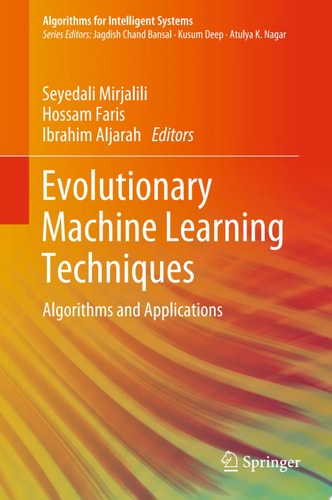
Evolutionary Machine Learning Techniques
0
0
As an Amazon Associate and affiliate partner, Menrva Books earns from qualifying purchases. Learn more
Author Description
This book provides an in-depth analysis of the current evolutionary machine learning techniques. Discussing the most highly regarded methods for classification, clustering, regression, and prediction, it includes techniques such as support vector machines, extreme learning machines, evolutionary feature selection, artificial neural networks including feed-forward neural networks, multi-layer perceptron, probabilistic neural networks, self-optimizing neural networks, radial basis function networks, recurrent neural networks, spiking neural networks, neuro-fuzzy networks, modular neural networks, physical neural networks, and deep neural networks. The book provides essential definitions, literature reviews, and the training algorithms for machine learning using classical and modern nature-inspired techniques. It also investigates the pros and cons of classical training algorithms. It features a range of proven and recent nature-inspired algorithms used to train different types of artificial neural networks, including genetic algorithm, ant colony optimization, particle swarm optimization, grey wolf optimizer, whale optimization algorithm, ant lion optimizer, moth flame algorithm, dragonfly algorithm, salp swarm algorithm, multi-verse optimizer, and sine cosine algorithm. The book also covers applications of the improved artificial neural networks to solve classification, clustering, prediction and regression problems in diverse fields.
Menrva's Summary
THE THESIS
This book investigates the integration of evolutionary computation with machine learning techniques to address complex problems in classification, clustering, regression, and prediction. The author, Seyedali Mirjalili, a recognized expert in the field, draws upon extensive literature to present a comprehensive analysis of highly regarded methods. The work details classical and modern nature-inspired algorithms, examining their strengths and weaknesses, and provides essential definitions and training algorithms for various artificial neural network architectures, including deep learning models.
THE SCOPE MAP
- Detailed analysis of evolutionary machine learning techniques for classification, clustering, regression, and prediction.
- In-depth discussion of methods such as Support Vector Machines and Extreme Learning Machines.
- Coverage of various Artificial Neural Network architectures: Feed-forward, Multi-layer Perceptron, Probabilistic, Self-optimizing, Radial Basis Function, Recurrent, Spiking, Neuro-fuzzy, Modular, Physical, and Deep Neural Networks.
- Exploration of evolutionary feature selection techniques.
- Presentation of classical and modern nature-inspired algorithms for training neural networks, including Genetic Algorithm, Particle Swarm Optimization, Grey Wolf Optimizer, and Whale Optimization Algorithm.
- Investigation into the pros and cons of classical training algorithms.
- Examination of applications of improved artificial neural networks across diverse fields.
THE AUTHORITY PERSPECTIVE
The book is positioned as a comprehensive resource for understanding and applying evolutionary machine learning techniques. Its detailed exploration of numerous algorithms and neural network types suggests it is aimed at researchers and practitioners seeking to leverage nature-inspired optimization for complex data analysis tasks. The inclusion of literature reviews and training algorithms indicates a focus on providing both theoretical grounding and practical implementation guidance.
Page Count:
286
Publication Date:
2019-11-11
Publisher:
Springer Nature
ISBN-10:
9813299908
ISBN-13:
9789813299900
Science
Non-Fiction
Data Science
Computer Science
Machine Learning
Community Tags
Similar Books