Object Lessons: How Nineteenth-Century Americans Learned to Make Sense of the Material World
0
0
As an Amazon Associate and affiliate partner, Menrva Books earns from qualifying purchases. Learn more
Author Description
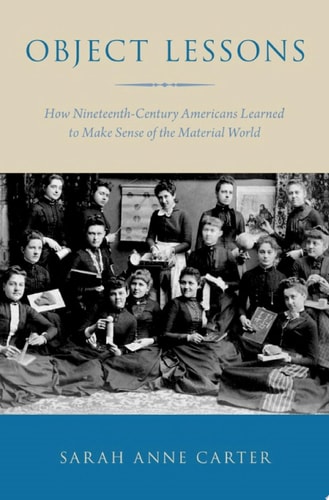
Object Lessons: How Nineteenth-Century Americans Learned to Make Sense of the Material World examines the ways material things--objects and pictures--were used to reason about issues of morality, race, citizenship, and capitalism, as well as reality and representation, in the nineteenth-century United States. For modern scholars, an "object lesson" is simply a timeworn metaphor used to describe any sort of reasoning from concrete to abstract. But in the 1860s, object lessons were classroom exercises popular across the country. Object lessons helped children to learn about the world through their senses--touching and seeing rather than memorizing and repeating--leading to new modes of classifying and comprehending material evidence drawn from the close study of objects, pictures, and even people. In this book, Sarah Carter argues that object lessons taught Americans how to find and comprehend the information in things--from a type-metal fragment to a whalebone sample. Featuring over fifty images and a full-color insert, this book offers the object lesson as a new tool for contemporary scholars to interpret the meanings of nineteenth-century material, cultural, and intellectual life.
Menrva's Summary
THE THESIS
How did the nineteenth-century pedagogical practice of the 'object lesson' shape the way Americans interpreted the material world and constructed social meaning? Sarah Anne Carter, a scholar of material culture, investigates the transition from rote memorization to sensory-based learning in American classrooms. She argues that these object-based exercises provided a framework for citizens to navigate complex issues of morality, race, and capitalism by teaching them to extract information from physical artifacts.
THE SCOPE MAP
What You Will Find
- Analysis of nineteenth-century classroom pedagogical techniques
- Examination of how objects like type-metal fragments and whalebone samples were used as educational tools
- Investigation into the intersection of material culture and social constructs like citizenship and race
Scope Limits
- The study focuses primarily on the United States during the nineteenth century
- The text does not provide a comprehensive history of all educational reforms of the era
THE AUTHORITY PERSPECTIVE
Scholars in the field of material culture and history of education view this work as a significant contribution to understanding how nineteenth-century Americans processed their environment. The text is noted for its interdisciplinary approach, effectively bridging the gap between pedagogical history and the study of material objects.
Page Count:
216
Publication Date:
2018-01-01
Publisher:
Oxford University Press
ISBN-10:
019022505X
ISBN-13:
9780190225056
History
Special Topics
United States
American History
Education - History
Community Tags
Similar Books