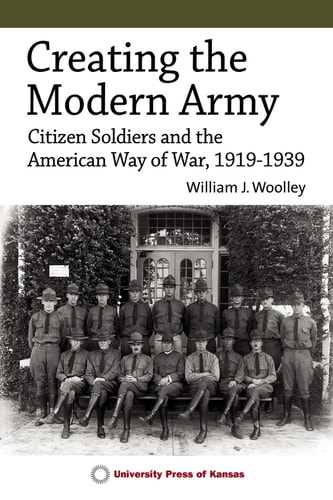
Creating the Modern Army: Citizen-Soldiers and the American Way of War, 1919-1939
0
0
As an Amazon Associate and affiliate partner, Menrva Books earns from qualifying purchases. Learn more
Author Description
The modern US Army as we know it was largely created in the years between the two world wars. After World War I, officers in leadership positions were increasingly convinced that building a new army could not take place as a series of random developments, but was an enterprise that had to be guided by a distinct military policy that enjoyed the support of the nation. William J. Woolley argues that the key to the modernization of the army in this period was the National Defense Act of 1920, which provided a blueprint for desired change and demonstrates that the transformation of the army was due to four elements: the creation of the civilian components of the new army (the Citizen's Military Training Camps (CMTC), the Officer Reserve Corps (ORC), the National Guard, and the Reserve Officer Training Corps (ROTC)); the development of the branches as the structural basis for organizing the army as well as creating the means to educate new officers and soldiers about their craft and to socialize them into an army culture; the creation of a rationalized and progressive system of professional military education; and the initial mechanization of the combat branches
Menrva's Summary
THE THESIS
The period between World War I and World War II witnessed the fundamental creation of the modern U.S. Army through a deliberate military policy. William J. Woolley posits that the National Defense Act of 1920 was the pivotal legislation guiding this transformation. The modernization was driven by the integration of civilian components like the CMTC, ORC, National Guard, and ROTC, alongside the development of army branches for organization and education. Further key elements included a rationalized professional military education system and the initial mechanization of combat units.
THE SCOPE MAP
- The National Defense Act of 1920 as a blueprint for army modernization.
- The establishment and role of civilian components: Citizen's Military Training Camps (CMTC), Officer Reserve Corps (ORC), National Guard, and Reserve Officer Training Corps (ROTC).
- The development of army branches as organizational structures and educational platforms.
- The creation of a progressive system of professional military education.
- The initial mechanization efforts within the combat branches.
- The overarching theme of creating 'citizen-soldiers' and the American way of war.
THE AUTHORITY PERSPECTIVE
The book examines the critical interwar period in U.S. military history, focusing on the legislative and structural changes that shaped the modern army. It highlights the strategic thinking and policy decisions that moved away from ad-hoc development towards a guided, national-supported military enterprise. The analysis emphasizes the interconnectedness of civilian training programs, organizational branches, professional education, and technological adoption in forging the army's identity and capabilities.
Page Count:
395
Publication Date:
2022-01-01
Publisher:
University Press of Kansas
ISBN-10:
0700633030
ISBN-13:
9780700633036
Non-Fiction
History
Government Policy
Policy
American History
Government
Military History
Community Tags
Similar Books