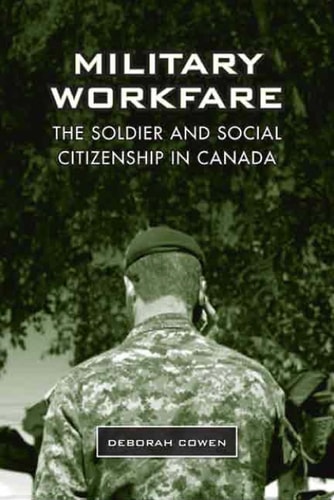
Military Workfare
0
0
As an Amazon Associate and affiliate partner, Menrva Books earns from qualifying purchases. Learn more
Author Description
Despite the centrality of war in social and political thought, the military remains marginal in academic and public conceptions of citizenship, and the soldier seems to be thought of as a peripheral or even exceptional player. Military Workfare draws on five decades of restricted archival material and critical theories on war and politics to examine how a military model of work, discipline, domestic space, and the social self has redefined citizenship in the wake of the Second World War. It is also a study of the complex, often concealed ways in which organized violence continues to shape national belonging. What does the military have to do with welfare? Could war-work be at the centre of social rights in both historic and contemporary contexts? Deborah Cowen undertakes such important questions with the citizenship of the soldier front and centre in the debate. Connecting global geopolitics to intimate struggles over entitlement and identity at home, she challenges our assumptions about the national geographies of citizenship, proposing that the soldier has, in fact, long been the model citizen of the social state. Paying particular attention to the rise of neoliberalism and the emergence of civilian workfare, Military Workfare looks to the institution of the military to unsettle established ideas about the past and raise new questions about our collective future.
Menrva's Summary
THE THESIS
This book investigates how the military has fundamentally reshaped the concept of citizenship in the post-World War II era. Deborah Cowen examines the often-overlooked ways in which military models of work, discipline, and social organization have redefined national belonging and social rights. Drawing on restricted archival material and critical theories of war and politics, the book challenges conventional understandings of the soldier's role, arguing that the soldier has historically served as the archetypal citizen of the social state. It connects global geopolitical shifts to domestic struggles over identity and entitlement, particularly in the context of rising neoliberalism and civilian workfare.
THE SCOPE MAP
- Analysis of military models of work and discipline post-WWII.
- Examination of how military structures have redefined citizenship.
- Exploration of the relationship between organized violence and national belonging.
- Investigation into the concept of 'war-work' as central to social rights.
- Connection of global geopolitics to intimate struggles over entitlement and identity.
- Critique of neoliberalism and the emergence of civilian workfare through a military lens.
- Use of restricted archival material and critical theories on war and politics.
THE AUTHORITY PERSPECTIVE
The book critically examines the often-concealed influence of the military on the concept of citizenship, particularly in the post-World War II period. It challenges established notions by proposing that the soldier has served as a model citizen, influencing social rights and national belonging. The work connects macro-level geopolitical events with micro-level struggles over identity and entitlement, offering a reevaluation of the relationship between war, welfare, and the social state. Its analysis is grounded in extensive archival research and theoretical frameworks concerning war and politics.
Page Count:
320
Publication Date:
2008-04-19
Publisher:
University of Toronto Press
ISBN-10:
1442691549
ISBN-13:
9781442691544
Politics
History
Non-Fiction
Sociology
Military History
Community Tags
Similar Books