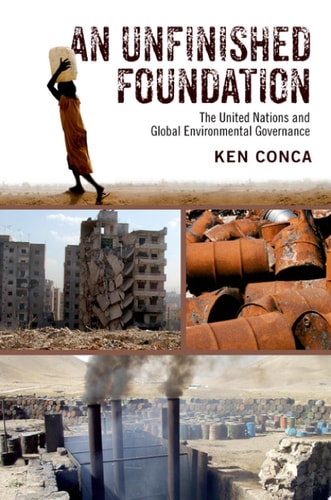
An Unfinished Foundation
0
0
As an Amazon Associate and affiliate partner, Menrva Books earns from qualifying purchases. Learn more
Author Description
Why Is The United Nations Not More Effective On Global Environmental Challenges? The Un Charter Mandates The Global Organization To Seek Four Noble Aspirations: International Peace And Security, Rule Of Law Among Nations, Human Rights For All People, And Social Progress Through Development. On Environmental Issues, However, The Un Has Understood Its Charge Much More Narrowly: It Works For Better Law Between Nations And Better Development Within Them. This Approach Treats Peace And Human Rights As Unrelated To The World's Environmental Problems, Despite A Large Body Of Evidence To The Contrary. In This Path-breaking Book, A Leading Scholar Of Global Environmental Governance Critiques The Un's Failure To Use Its Mandates On Human Rights And Peace As Tools In Its Environmental Work. The Book Traces The Institutionalization And Performance Of The Un's Law And Development Framework And The Parallel Silence On Rights And Peace. Despite Some Important Gains, The Traditional Approach Is Failing For Some Of World's Most Pressing And Contentious Environmental Challenges, And Has Lost Most Of The Political Momentum It Once Enjoyed. The Disastrous Rio+20 Summit Laid This Fact Bare, As Assembled Governments Failed To Find Meaningful Agreement On Any Of The Most Pressing Issues. By Not Treating The Environment As A Human Rights Issue, The Un Fails To Mobilize Powerful Tools For Accountability In The Face Of Pollution And Resource Degradation. And By Ignoring The Conflict Potential Around Natural Resources And Environmental Protection Efforts, The Un Misses Opportunities To Transform The Destructive Cycle Of Violence And Vulnerability Around Resource Extraction. The Book Traces The History Of The Un's Traditional Approach, Maps Its Increasingly Apparent Limits, And Suggests Needed Reforms. Detailed Case Histories For Each Of The Four Mandate Domains Flag Several Promising Initiatives, While Identifying Barriers To Transformation. Its Core Implication: The Un's Environmental Effort
Menrva's Summary
THE THESIS
Why does the United Nations struggle to address global environmental challenges effectively despite its broad institutional mandate? Ken Conca, a scholar of global environmental governance, argues that the UN has historically restricted its environmental efforts to narrow frameworks of international law and development. By failing to integrate its mandates regarding human rights and peace into environmental policy, the organization misses critical opportunities to hold actors accountable and mitigate resource-driven conflict.
THE SCOPE MAP
What You Will Find
- Analysis of the UN's traditional law and development framework regarding environmental issues.
- Evaluation of the Rio+20 summit as a case study for institutional failure.
- Examination of the intersection between environmental degradation, human rights, and conflict.
- Proposed reforms for integrating peace and rights-based approaches into environmental governance.
Scope Limits
- The book does not provide a comprehensive history of all UN environmental agencies.
- It does not offer a detailed technical manual for local-level environmental management.
THE AUTHORITY PERSPECTIVE
Experts in international relations recognize this work as a critical assessment of the limitations inherent in current global environmental governance structures. Readers frequently note the academic density of the prose and the author's rigorous application of institutional theory to environmental policy.
Page Count:
256
Publication Date:
2015-01-01
Publisher:
Oxford University Press
ISBN-10:
0190232870
ISBN-13:
9780190232870
Conflict Resolution
United Nations
Human rights
International relations
Community Tags
Similar Books