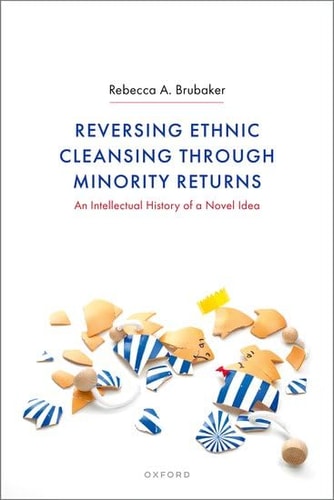
Reversing Ethnic Cleansing through Minority Returns: An Intellectual History of a Novel Idea
0
0
As an Amazon Associate and affiliate partner, Menrva Books earns from qualifying purchases. Learn more
Author Description
Ethnic conflict is not new. Nor are international attempts to prevent or contain it. Reversing Ethnic Cleansing through Minority Returns examines whether and how ethnic, religious, and political minorities should be returned and reintegrated after conflict. Its main focus is the unprecedented international attempt to 're-mix' ethnic groups in Bosnia, following the war. The book scrutinizes the puzzle of why states and international organizations pursued a re-mixing policy in response to ethnic cleansing in Bosnia. There were multiple policy alternatives on the table at the start of the conflict. Compared to these, re-mixing was an unlikely choice: politically, it was risky; locally, it was unpopular; financially, it was expensive; and practically, it ultimately failed. Yet Washington and the United Nations chose to prioritize re-mixing nonetheless, justifying their choice on the grounds that it was essential for 'reversing' ethnic cleansing and thereby re-establishing a multi-ethnic Bosnia.More generally, this book offers insights into how refugee return policies emerge, evolve, and solidify in a European context. In doing so, it contributes to a better understanding of how normative discourses transform into policy as well as offers policy recommendations for approaching the challenge of facilitating returns and reintegration following a war's end. Understanding how and why such “unintended norm diffusion” emerged is a crucial addition to the historical record and provides an important correction to the lessons normally drawn from this precedent-breaking case.
Menrva's Summary
THE THESIS
This book investigates the intellectual origins and policy motivations behind the international effort to reverse ethnic cleansing through the forced reintegration of minority populations in post-war Bosnia. Dr. Rebecca A. Brubaker, a scholar of international relations and conflict studies, analyzes why global powers prioritized the 're-mixing' of ethnic groups despite significant political, financial, and practical obstacles. By examining the normative discourses that shaped this intervention, the author provides a critical assessment of how specific policy ideas gain traction within international organizations and state governments.
THE SCOPE MAP
What You Will Find
- An intellectual history of the 're-mixing' policy implemented in post-conflict Bosnia.
- A comparative analysis of policy alternatives available to the United Nations and Washington during the Bosnian conflict.
- An examination of the mechanisms behind unintended norm diffusion in European refugee policy.
- Policy recommendations for the future management of minority returns and post-war reintegration efforts.
THE AUTHORITY PERSPECTIVE
Experts in international relations and human rights law identify this work as a significant contribution to the study of post-conflict reconstruction and normative policy evolution. Readers frequently note the academic rigor of the text, which serves as a foundational analysis for understanding the complexities of international intervention in ethnic conflicts.
Page Count:
256
Publication Date:
2025-03-27
Publisher:
Oxford University Press
ISBN-10:
0198941358
ISBN-13:
9780198941354
History
Politics
World politics
European History
Specific Topics
Conflict Resolution
Human rights
International relations
Community Tags
Similar Books