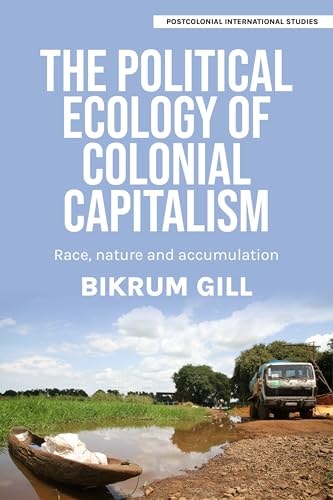
The Political Ecology of Colonial Capitalism: Race, Nature, and Accumulation
0
0
As an Amazon Associate and affiliate partner, Menrva Books earns from qualifying purchases. Learn more
Author Description
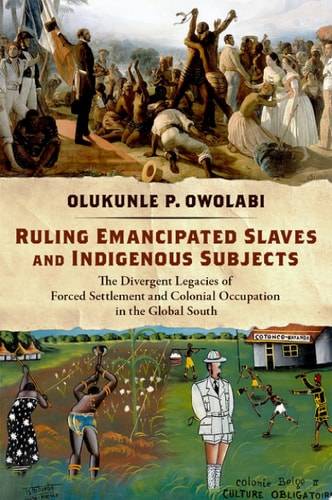
This book articulates an analytical framework for understanding how race, nature, and capitalism are co-constituted on a planetary scale. The framework of the 'political ecology of colonial capitalism' elucidates how the co-production of race and the society/nature distinction operates as a foundational structure of capitalism. In order to express the relationship between global inequality and planetary ecological crises, the book applies this framework to a theoretical and historical analysis of the 'global land grab', which refers to the intensification, beginning in the 2010s and continuing into the 2020s, of large scale transnational agricultural land acquisitions in the global South. It orients analytical attention towards how capitalist development has proceeded, over its long history, through a succession of accumulation cycles that rise and fall in correspondence with the racialized construction, and ultimate exhaustion, of frontiers of "unused" natures. At one level, the book foregrounds how colonialism materially opens, through violent dispossession of colonized peoples, frontiers provisioning the necessary cheap inputs for capitalist development. It then proceeds, on a second level, to reveal how the accompanying conceptualization of the frontier as an 'unused' nature distinct from human society is contingent upon a technology of race which re-presents Indigenous sovereign earth-worlds as unused and wasted virgin natures. The book thus demonstrates how the global land grab is driven by a systemic colonial-capitalist logic of racialized frontier re-generation attempting to overcome the crisis context marking the exhaustion of the neoliberal epoch of capitalism.
Menrva's Summary
THE THESIS
This book articulates an analytical framework for understanding how race, nature, and capitalism are co-constituted on a planetary scale. The framework of the 'political ecology of colonial capitalism' elucidates how the co-production of race and the society/nature distinction operates as a foundational structure of capitalism. The book applies this framework to a theoretical and historical analysis of the 'global land grab,' examining the intensification of large-scale transnational agricultural land acquisitions in the global South. It demonstrates how capitalist development has historically proceeded through cycles of accumulation fueled by the racialized construction and exhaustion of frontiers of 'unused' natures.
THE SCOPE MAP
- An analytical framework for understanding the co-constitution of race, nature, and capitalism.
- Theoretical and historical analysis of the 'global land grab' in the Global South.
- Examination of how colonial dispossession creates frontiers for capitalist development.
- Exploration of how the concept of 'unused nature' is contingent upon racial technologies.
- Demonstration of the systemic colonial-capitalist logic driving racialized frontier re-generation.
THE AUTHORITY PERSPECTIVE
The book presents a dense, theoretically-driven analysis of the interconnectedness of colonial capitalism, race, and ecological crises. Its focus on the 'global land grab' offers a specific lens through which to understand historical and contemporary processes of accumulation. The subject matter points to a text intended for scholars and students of political ecology, critical geography, and postcolonial studies. The framing suggests a critical engagement with established theories of capitalism and development.
Page Count:
241
Publication Date:
2024-01-01
Publisher:
Manchester University Press
ISBN-10:
1526181355
ISBN-13:
9781526181350
Non-Fiction
History
Economics
Global South
Colonialism
Race
Capitalism
Community Tags
Similar Books