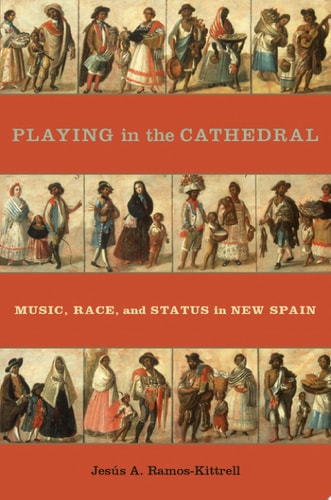
Playing in the Cathedral
0
0
As an Amazon Associate and affiliate partner, Menrva Books earns from qualifying purchases. Learn more
Author Description
Throughout Spanish Colonial America, Limpieza De Sangre (literally, Purity Of Blood) Determined An Individual's Status Within The Complex System Of Social Hierarchy Called Casta. Within This Socially Stratified Culture, Those Individuals At The Top Were Considered To Have The Highest Calidad-an All-encompassing Estimation Of A Person's Social Status. At The Top Of The Social Pyramid Were The Peninsulares: Spaniards Born In Spain, Who Controlled Most Of The Positions Of Power Within The Colonial Governments And Institutions. Making Up Most Of The Middle-class Were Criollos, Locally Born People Of Spanish Ancestry. During The Late Seventeenth And Early Eighteenth Centuries, Peninsulare Intellectuals Asserted Their Cultural Superiority Over Criollos By Claiming That American Spaniards Had A Generally Lower Calidad Because Of Their Impure Racial Lineage. Still, Given Their Spanish Heritage, Criollos Were Allowed Employment At Many Spanish Institutions In New Spain, Including The Center Of Spanish Religious Practice In Colonial America: Mexico City Cathedral. Indeed, Most Of The Cathedral Employees-in Particular, Musicians-were Middle-class Criollos. In Playing In The Cathedral, Author Jesús Ramos-kittrell Explores How Liturgical Musicians-choristers And Instrumentalists, As Well As Teachers And Directors-at Mexico City Cathedral In The Mid-eighteenth Century Navigated Changing Discourses About Social Status And Racial Purity. He Argues That Criollos Cathedral Musicians, Influenced By Enlightenment Values Of Self-industry And Autonomy, Fought Against The Peninsulare-dominated, Racialized Casta System. Drawing On Extensive Archival Research, Ramos-kittrell Shows That These Musicians Held Up Their Musical Training And Knowledge, As Well As Their Institutional Affiliation With The Cathedral, As Characteristics That Legitimized Their Calidad And Aided Their Social Advancement. The Cathedral Musicians Invoked Claims Of Decency And Erudition In Asserting Their Social Worth.
Menrva's Summary
THE THESIS
This book investigates how mid-eighteenth-century liturgical musicians at the Mexico City Cathedral navigated and challenged the rigid racialized social hierarchies of Spanish Colonial America. Author Jesús A. Ramos-Kittrell, a scholar of musicology and colonial history, utilizes extensive archival research to examine the intersection of Enlightenment values, professional identity, and the caste system. He argues that musicians leveraged their specialized training and institutional status to redefine their social worth against the prevailing discourse of 'purity of blood.'
THE SCOPE MAP
What You Will Find
- Analysis of the 'limpieza de sangre' and 'casta' social systems in New Spain.
- Examination of the professional lives of choristers, instrumentalists, and music directors.
- Historical context regarding the influence of Enlightenment ideals on colonial social mobility.
Scope Limits
- The study is geographically focused on the Mexico City Cathedral.
- The research is primarily confined to the mid-eighteenth century.
THE AUTHORITY PERSPECTIVE
Scholars in the field of colonial musicology recognize this work as a significant contribution to understanding the intersection of professional identity and social stratification. Readers frequently note the academic rigor of the archival research and the clarity with which the author connects musical practice to broader sociopolitical shifts.
Page Count:
288
Publication Date:
2016-01-01
Publisher:
Oxford University Press
ISBN-10:
0190236825
ISBN-13:
9780190236823
History
Musicology
Social History
American History
Community Tags
Similar Books