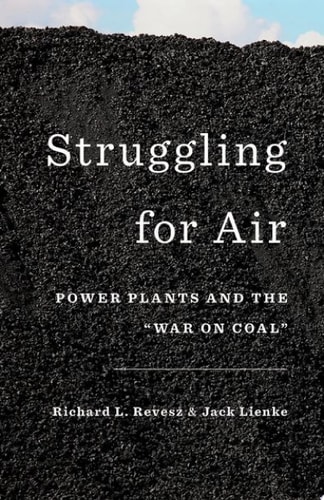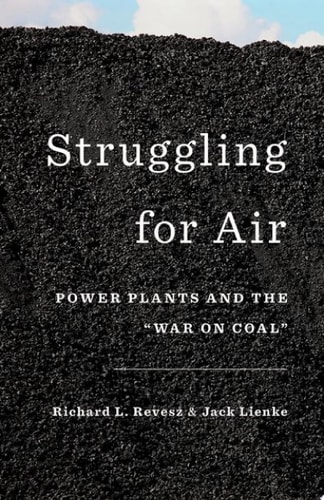
Struggling for Air: Power Plants and the "War on Coal"
0
0
As an Amazon Associate and affiliate partner, Menrva Books earns from qualifying purchases. Learn more
Author Description
Since the beginning of the Obama Administration, conservative politicians have railed against the President's "War on Coal." As evidence of this supposed siege, they point to a series of rules issued by the Environmental Protection Agency that aim to slash air pollution from the nation's power sector. Because coal produces far more pollution than any other major energy source, these rules are expected to further reduce its already shrinking share of the electricity market in favor of cleaner options like natural gas and solar power. But the EPA's policies are hardly the "unprecedented regulatory assault " that opponents make them out to be. Instead, they are merely the latest chapter in a multi-decade struggle to overcome a tragic flaw in our nation's most important environmental law.In 1970, Congress passed the Clean Air Act, which had the remarkably ambitious goal of eliminating essentially all air pollution that posed a threat to public health or welfare. But there was a problem: for some of the most common pollutants, Congress empowered the EPA to set emission limits only for newly constructed industrial facilities, most notably power plants. Existing plants, by contrast, would be largely exempt from direct federal regulation-a regulatory practice known as "grandfathering." What lawmakers didn't anticipate was that imposing costly requirements on new plants while giving existing ones a pass would simply encourage those old plants to stay in business much longer than originally planned. Since 1970, the core problems of U.S. environmental policy have flowed inexorably from the smokestacks of these coal-fired clunkers, which continue to pollute at far higher rates than their younger peers.In Struggling for Air, Richard L. Revesz and Jack Lienke chronicle the political compromises that gave rise to grandfathering, its deadly consequences, and the repeated attempts-by presidential administrations of both parties-to make things right.
Menrva's Summary
THE THESIS
This book investigates whether the Environmental Protection Agency's recent regulations on power plants constitute an unprecedented regulatory assault or are a necessary correction to a long-standing flaw in the Clean Air Act. The authors, Richard L. Revesz and Jack Lienke, leverage their expertise in environmental law and policy to analyze the historical context of the 1970 Clean Air Act. They argue that the policy of grandfathering existing power plants created a perverse incentive for aging, high-pollution facilities to remain operational, thereby undermining the original health-focused goals of the legislation.
THE SCOPE MAP
What You Will Find
- Historical analysis of the 1970 Clean Air Act and its legislative compromises.
- Examination of the regulatory concept of grandfathering and its impact on industrial longevity.
- Case studies of multi-decade efforts by various presidential administrations to address air pollution from the power sector.
Scope Limits
- The book does not provide a comprehensive technical manual for modern pollution control technologies.
- It does not offer a detailed economic forecast for the future of the global coal market beyond the context of U.S. domestic policy.
THE AUTHORITY PERSPECTIVE
Experts and policy analysts frequently cite this work as a clear, well-documented account of the legislative history behind modern environmental regulations. Readers often note that the prose remains accessible to non-specialists while providing enough legal detail to satisfy those interested in the intricacies of administrative law.
Page Count:
232
Publication Date:
2016-01-11
Publisher:
Oxford University Press
ISBN-10:
0190233117
ISBN-13:
9780190233112
History
Public Health
Energy Law
Energy policy
Power-plants
Professional Career & Trade
Community Tags
Similar Books