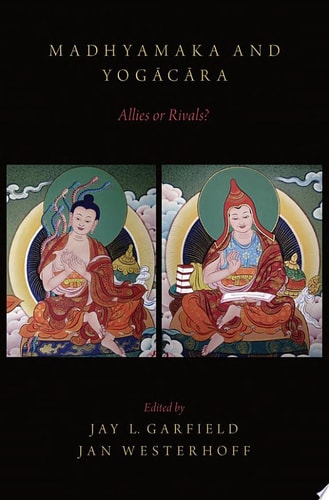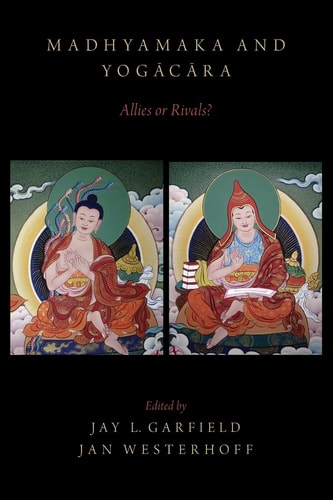
Madhyamaka and Yogacara: Allies or Rivals?
0
0
As an Amazon Associate and affiliate partner, Menrva Books earns from qualifying purchases. Learn more
Author Description
Madhyamaka and Yogacara are the two principal schools of Mahayana Buddhist philosophy. While Madhyamaka asserts the ultimate emptiness and conventional reality of all phenomena, Yogacara is usually considered to be idealistic. This collection of essays addresses the degree to which these philosophical approaches are consistent or complementary.Indian and Tibetan doxographies often take these two schools to be philosophical rivals. They are grounded in distinct bodies of sutra literature and adopt what appear to be very different positions regarding the analysis of emptiness and the status of mind. Madhyamaka-Yogacara polemics abound in Indian Buddhist literature, and Tibetan doxographies regard them as distinct systems. Nonetheless, scholars have tried to synthesize the two positions for centuries. This volume offers new essays by prominent experts on both these traditions, who address the question of the degree to which these philosophical approaches should be seen as rivals or as allies. In answering the question of whether Madhyamaka and Yogacara can be considered compatible, contributors engage with a broad range of canonical literature, and relate the texts to contemporary philosophical problems.
Menrva's Summary
THE THESIS
This collection of essays investigates whether the two primary schools of Mahayana Buddhist philosophy, Madhyamaka and Yogacara, function as irreconcilable rivals or as complementary allies. The editors, Jay L. Garfield and Jan Westerhoff, curate contributions from prominent scholars who analyze the historical, textual, and doctrinal tensions between these traditions. By examining the distinct sutra literature and metaphysical frameworks of each school, the authors evaluate the long-standing debate regarding the status of mind and the nature of emptiness in Buddhist thought.
THE SCOPE MAP
What You Will Find
- Comparative analysis of Madhyamaka and Yogacara metaphysical frameworks
- Examination of Indian and Tibetan doxographical traditions
- Synthesis of canonical literature with contemporary philosophical inquiry
- Scholarly essays addressing the compatibility of emptiness and idealism
Scope Limits
- Does not provide a general introduction to Buddhism for lay readers
- Does not attempt to resolve all historical polemics between the schools
THE AUTHORITY PERSPECTIVE
Experts recognize this volume as a significant contribution to the academic study of Buddhist philosophy, noting its rigorous engagement with complex canonical texts. Scholars frequently highlight the text as a necessary resource for those interested in the nuanced intersection of Indian and Tibetan philosophical systems.
Page Count:
304
Publication Date:
2015-04-13
Publisher:
Oxford University Press
ISBN-10:
0190231297
ISBN-13:
9780190231293
Religion
Philosophy
Buddhism
Buddhist Philosophy
Comparative Philosophy
Mahayana
Community Tags
Similar Books