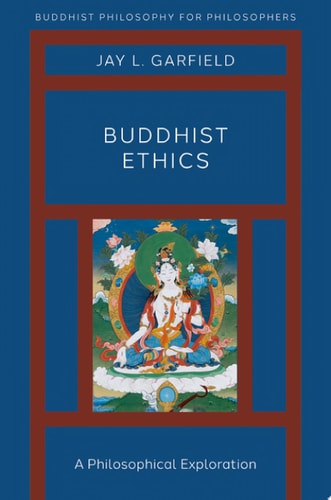
Buddhist Ethics
0
0
As an Amazon Associate and affiliate partner, Menrva Books earns from qualifying purchases. Learn more
Author Description
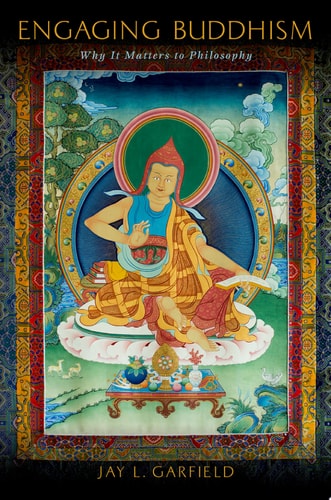
'Buddhist Ethics' presents an outline of Buddhist ethical thought. It is not a defense of Buddhist approaches to ethics as opposed to any other, nor is it a critique of the Western tradition. Garfield presents a broad overview of a range of Buddhist approaches to the question of moral philosophy. He argues that while there are important points of contact with these Western frameworks, Buddhist ethics is distinctive, and is a kind of moral phenomenology that is concerned with the ways in which we experience ourselves as agents and others as moral fellows.
Menrva's Summary
THE THESIS
This work investigates the core question of how Buddhist ethical thought functions as a distinct system of moral phenomenology. Jay L. Garfield, a prominent scholar of Buddhist philosophy, utilizes a broad range of classical and contemporary Buddhist texts to construct his argument. He posits that Buddhist ethics should be understood not as a competing moral framework to Western traditions, but as a unique inquiry into the nature of moral agency and interpersonal experience.
THE SCOPE MAP
What You Will Find
- An overview of diverse Buddhist ethical schools and perspectives
- Analysis of moral phenomenology and the experience of agency
- Examination of the relationship between self-perception and moral responsibility
Scope Limits
- Does not provide a comparative defense of Buddhism against Western ethical systems
- Does not offer a critique of Western moral philosophy
THE AUTHORITY PERSPECTIVE
Scholars and students of philosophy frequently identify this text as a foundational resource for understanding the nuances of Buddhist moral theory. Experts highlight the clarity of the prose, noting that it successfully bridges complex phenomenological concepts for both academic and general readers.
Page Count:
231
Publication Date:
2022-01-01
ISBN-10:
0190907657
ISBN-13:
9780190907655
Religion
Philosophy
Ethics
Buddhism
Comparative Philosophy
Moral Philosophy
Community Tags
Similar Books