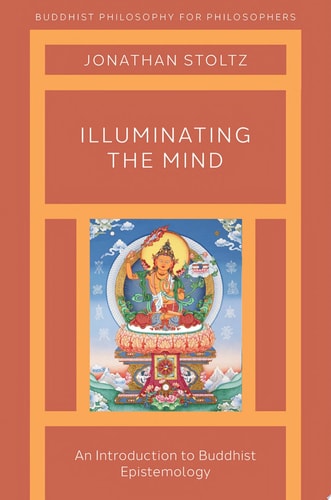
Illuminating the Mind: An Introduction to Buddhist Epistemology
0
0
As an Amazon Associate and affiliate partner, Menrva Books earns from qualifying purchases. Learn more
Author Description
Illuminating the Mind puts the field of Buddhist epistemology in conversation with contemporary debates in philosophy. Jonathan Stoltz provides readers with an introduction to epistemology within the Buddhist intellectual tradition in a manner that is accessible to those whose primary background is in the “Western” tradition of philosophy. The book examines many of the most important topics in the field of epistemology, topics that are central both to contemporary discussions of epistemology and to the classical Buddhist tradition of epistemology in India and Tibet. Among the topics discussed are Buddhist accounts of the nature of knowledge episodes, the defining conditions of perceptual knowledge and of inferential knowledge, the status of testimonial knowledge, and skeptical criticisms of the entire project of epistemology. Stoltz demonstrates how many of the arguments and debates occurring within classical Buddhist epistemological treatises coincide with the arguments and disagreements found in contemporary epistemology. He shows, for example, how Buddhist epistemologists developed an anti-luck epistemology-one that is linked to a sensitivity requirement for knowledge. Likewise, Stoltz explores the question of how the study of Buddhist epistemology can be of relevance to contemporary debates about the value of contributions from experimental epistemologists, and to broader debates concerning the use of philosophical intuitions about knowledge. Illuminating the Mind is essential reading for scholars and students interested in epistemology and its treatment in intellectual traditions beyond Western philosophy.
Menrva's Summary
THE THESIS
This book investigates how classical Buddhist epistemological frameworks intersect with and inform contemporary philosophical debates regarding the nature of knowledge. Jonathan Stoltz, a scholar of philosophy, utilizes his expertise to bridge the gap between Indian and Tibetan Buddhist traditions and Western analytic philosophy. By analyzing core arguments from classical treatises, he constructs a comparative methodology that highlights shared concerns regarding perception, inference, and the definition of knowledge.
THE SCOPE MAP
What You Will Find
- Comparative analysis of Buddhist and Western epistemological arguments
- Examination of perceptual knowledge, inferential knowledge, and testimonial knowledge
- Discussion of anti-luck epistemology and sensitivity requirements
- Evaluation of experimental epistemology and the role of philosophical intuition
Scope Limits
- The text does not provide an exhaustive history of all Buddhist schools of thought
- It does not focus on the soteriological or meditative practices of Buddhism, prioritizing the analytical philosophical components
THE AUTHORITY PERSPECTIVE
Scholars and students of philosophy frequently highlight this text as a bridge for those trained in Western analytic traditions to engage with non-Western intellectual history. Experts note the clarity of the prose, which manages to maintain academic rigor while remaining accessible to those without a background in Buddhist studies.
Page Count:
274
Publication Date:
2021-01-01
Publisher:
Oxford University Press
ISBN-10:
0190907568
ISBN-13:
9780190907563
Philosophy
Religion
Buddhist Philosophy
Eastern
Comparative Philosophy
Epistemology
Buddhism
Mind & Body
Community Tags
Other Editions(2)
Similar Books