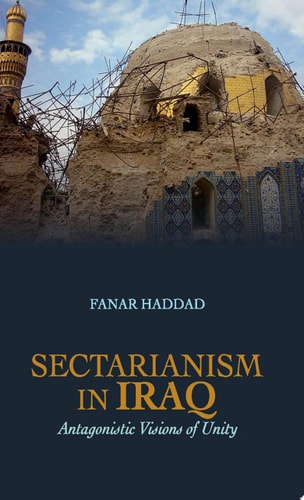
Sectarianism in Iraq
0
0
As an Amazon Associate and affiliate partner, Menrva Books earns from qualifying purchases. Learn more
Author Description
Viewing Iraq from the outside is made easier by compartmentalising its people (at least the Arabs among them) into Shi'as and Sunnis. But can such broad terms, inherently resistant to accurate quantification, description and definition, ever be a useful reflection of any society? If not, are we to discard the terms 'Shi'a' and 'Sunni' in seeking to understand Iraq? Or are we to deny their relevance and ignore them when considering Iraqi society? How are we to view the common Iraqi injunction that 'we are all brothers' or that 'we have no Shi'as and Sunnis' against the fact of sectarian civil war in 2006? Are they friends or enemies? Are they united or divided; indeed, are they Iraqis or are they Shi'as and Sunnis? Fanar Haddad provides the first comprehensive examination of sectarian relations and sectarian identities in Iraq. Rather than treating the subject by recourse to broad-based categorisation, his analysis recognises the inherent ambiguity of group identity. The salience of sectarian identity and views towards self and other are neither fixed nor constant; rather, they are part of a continuously fluctuating dynamic that sees the relevance of sectarian identity advancing and receding according to context and to wider socioeconomic and political conditions. What drives the salience of sectarian identity? How are sectarian identities negotiated in relation to Iraqi national identity and what role do sectarian identities play in the social and political lives of Iraqi Sunnis and Shi'as? These are some of the questions explored in this book with a particular focus on the two most significant turning points in modern Iraqi sectarian relations: the uprisings of March 1991 and the fall of the Ba'ath in 2003. Haddad explores how sectarian identities are negotiated and seeks finally to put to rest the alarmist and reductionist accounts that seek either to portray all things Iraqi in sectarian terms or to reduce sectarian identity to irrelevance.
Menrva's Summary
THE THESIS
This book investigates the complex, fluctuating nature of sectarian identity in Iraq and its role in shaping the country's social and political landscape. Fanar Haddad, a scholar specializing in Iraqi politics, challenges reductionist views that categorize Iraqis solely as Sunni or Shi'a. By analyzing the interplay between sectarian and national identities, he argues that these group identities are not fixed but are instead dynamic constructs influenced by shifting socioeconomic and political contexts.
THE SCOPE MAP
What You Will Find
- An examination of the 1991 uprisings and the 2003 fall of the Ba'ath regime as critical turning points.
- A theoretical framework for understanding the negotiation of group identity in modern Iraq.
- Analysis of the tension between Iraqi national identity and sectarian affiliation.
Scope Limits
- The text does not provide a comprehensive history of all Iraqi ethnic groups, focusing primarily on the Arab Sunni and Shi'a populations.
- It does not offer a predictive model for future political outcomes in the region.
THE AUTHORITY PERSPECTIVE
Experts recognize this work as a foundational text for understanding the nuances of Iraqi social dynamics beyond simplistic media narratives. Readers frequently note the academic density of the prose, which provides a rigorous and balanced perspective on a highly contentious subject.
Page Count:
256
Publication Date:
2014-01-01
Publisher:
Oxford University Press
ISBN-10:
019023797X
ISBN-13:
9780190237974
Politics
History
Sociology
Iraq
Sectarianism
Middle Eastern
Community Tags
Other Editions(3)

Similar Books










Reader Comments
Share Your Thoughts
No comments yet. Be the first to share your thoughts!