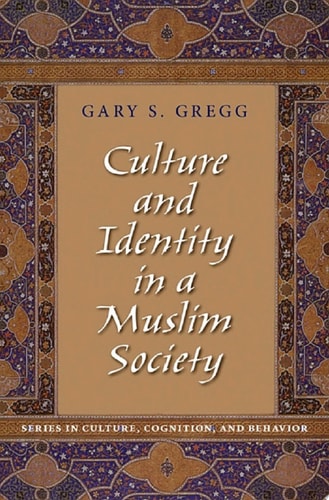
Culture and Identity in a Muslim Society
0
0
As an Amazon Associate and affiliate partner, Menrva Books earns from qualifying purchases. Learn more
Author Description
In the last fifteen years, psychologists have rediscovered culture and its influence on emotion, thought, and self. Many researchers have come to the conclusion that the world's cultures can be ranked according to the degree to which they are individualist or collectivist, with Western cultures falling at the individualist end and non-Western cultures at the collectivist end. These scholars argue that while individualist cultures give rise to "independent" selves, leading Westerners to think and act autonomously, collectivist cultures foster "interdependent" selves, leading non-Westerners, embedded in social-relationships, to think and act relationally. Culture and Identity in a Muslim Society presents an alternative to the individualist- collectivist approach to identity. Unlike most psychological and anthropological studies of culture and self, Gary Gregg's work directly investigates individuals, using "study of lives"-style interviews with young adults living in villages and small towns in southern Morocco. Analyzing these young adults' life-narratives, Gregg builds a theory of culture and identity that differs from prevailing psychological and anthropological models in important respects. In contrast to modernist theories of identity as unified, the life-narratives show individuals to articulate a small set of shifting identities. In contrast to post-modern theories that claim people have a kaleidoscopic multiplicity of fluid identities, the narratives show that the identities are integrated by repeated use of culturally-specific self-symbols, metaphors, and story-plots. Most importantly, the life-narratives show these young Moroccans' self-representations to be pervasively shaped by the volatile cultural struggle between Western-style "modernity" and authentic Muslim "tradition." Offering a new approach to the study of identity, the volume will be of interest to cross-cultural psychologists, anthropologists, scholars of Middle-East societies, and researchers sp
Menrva's Summary
THE THESIS
This work investigates whether the prevailing individualist-collectivist dichotomy adequately explains identity formation in non-Western societies. Gary S. Gregg, a psychologist, challenges existing psychological and anthropological models by analyzing the life-narratives of young adults in southern Morocco. He argues that identity is neither a singular, unified construct nor a chaotic, fluid multiplicity, but rather a set of shifting identities integrated through culturally specific metaphors and symbols.
THE SCOPE MAP
What You Will Find
- Qualitative analysis of life-narrative interviews with young adults in rural Morocco.
- A critique of the individualist-collectivist framework in cross-cultural psychology.
- A theoretical model of identity as a negotiation between modernity and tradition.
Scope Limits
- The study focuses specifically on a subset of young adults in southern Morocco and does not claim to represent all Muslim societies.
- The research does not provide a quantitative survey of broader demographic trends.
THE AUTHORITY PERSPECTIVE
Scholars in cross-cultural psychology and Middle Eastern studies frequently cite this text for its methodological departure from standard survey-based research. Experts highlight the book as a significant contribution to the study of self-representation in societies undergoing rapid cultural transition.
Page Count:
379
Publication Date:
2007-01-01
Publisher:
Oxford University Press
ISBN-10:
0190294957
ISBN-13:
9780190294953
Psychology
History
Anthropology
Sociology
Personality And Culture
Middle Eastern
Identity Theory
Comparative Politics
Community Tags
Other Editions(3)

Similar Books






Reader Comments
Share Your Thoughts
No comments yet. Be the first to share your thoughts!