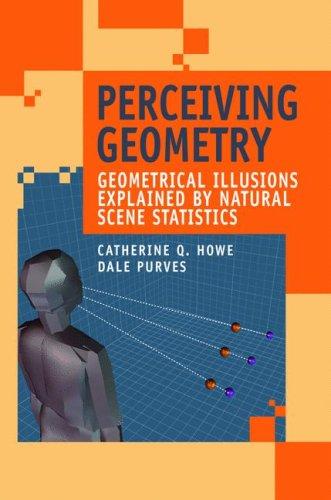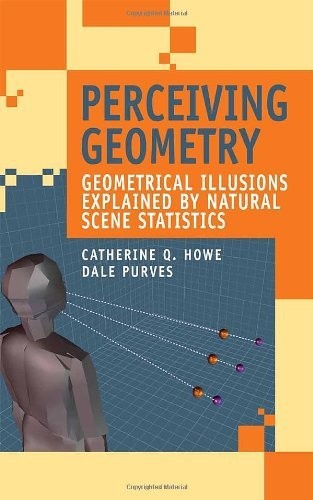
Perceiving Geometry: Geometrical Illusions Explained by Natural Scene Statistics
0
0
As an Amazon Associate and affiliate partner, Menrva Books earns from qualifying purchases. Learn more
Author Description
NONE. Menrva holds no usable description for this book. Unless you genuinely and specifically know this published work, set sufficient_material=false. Do NOT infer a plot, characters, or contents from the title.
Menrva's Summary
THE THESIS
This book investigates the underlying statistical regularities of natural scenes and how they shape our perception of geometrical illusions. Catherine Q. Howe, drawing on her expertise in visual perception and natural scene statistics, presents a novel framework for understanding why certain geometrical illusions occur. The book explores how the brain, through its adaptation to the statistical properties of the visual world, interprets ambiguous or distorted visual information, leading to predictable perceptual errors. It aims to bridge the gap between low-level visual processing and higher-level cognitive interpretations of visual stimuli.
THE SCOPE MAP
- An exploration of geometrical illusions through the lens of natural scene statistics.
- Analysis of how the brain's statistical learning mechanisms influence visual perception.
- Discussion of specific illusions and their explanation based on environmental regularities.
- Integration of computational models and experimental psychology findings.
THE AUTHORITY PERSPECTIVE
The book is likely to be of interest to researchers and advanced students in vision science, cognitive psychology, and computational neuroscience. Its approach, linking perceptual phenomena to statistical properties of the environment, suggests a rigorous and data-driven analysis. The focus on explaining well-known illusions through a unified theoretical framework indicates a contribution to the understanding of visual perception.
Page Count:
126
Publication Date:
2005-01-01
ISBN-10:
0387254889
ISBN-13:
9780387254883
Non-Fiction
Psychology
Science
Vision Science
Geometry
Perception
Community Tags
Similar Books