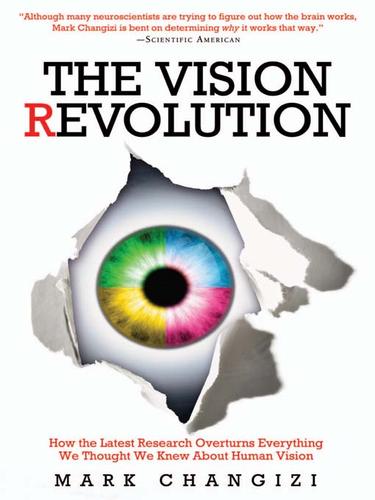
The Vision Revolution
0
0
As an Amazon Associate and affiliate partner, Menrva Books earns from qualifying purchases. Learn more
Author Description
Primates evolved binocular vision (both eyes facing forward) so that they can see in three dimensions, critical as they jumped from branch to branch. Higher primates developed color vision to better hunt out ripe fruit. Optical illusions succeed because they exploit the limitations of our visual processing. Wrong! All of these beliefs are false, as groundbreaking research by evolutionary scientist and neurobiologist Mark Changizi now reveals. Changizi's research centers on the "why" of human vision. Why do we have binocular vision? Why do we see in color the way we do? Why do optical illusions work? And why are we able to absorb information by reading? A very new invention from an evolutionary perspective more readily than by hearing, which we've evolved to do over hundreds of thousands of years? The Vision Revolution answers these questions, and proves, with the detailed results of Changizi's fieldwork, that the answers are very different than traditionally believed. A radically new perspective of human vision is now emerging. The Vision Revolution is upon us.
Menrva's Summary
THE THESIS
The Vision Revolution challenges long-held beliefs about the evolutionary purpose of human vision. Mark A. Changizi, an evolutionary scientist and neurobiologist, presents groundbreaking research that refutes traditional explanations for binocular vision, color vision, and the effectiveness of optical illusions. His work centers on the 'why' behind these visual phenomena, proposing that our visual systems evolved for reasons distinct from commonly accepted theories. The book argues for a radically new perspective on human vision, supported by detailed fieldwork and analysis.
THE SCOPE MAP
- What You Will Find:
- An evolutionary explanation for binocular vision in primates.
- A reevaluation of the role of color vision in fruit detection and hunting.
- An analysis of why optical illusions exploit specific limitations in visual processing.
- A discussion on the evolutionary advantages of reading compared to hearing.
- Presentation of fieldwork results supporting new theories on human vision.
THE AUTHORITY PERSPECTIVE
The Authority Perspective: This book is likely to be regarded as a significant contribution to the fields of evolutionary biology and visual science, offering a contrarian viewpoint to established theories. Its detailed research and novel arguments are expected to stimulate debate among specialists and interested lay readers alike. The work aims to provide a comprehensive, evidence-based reinterpretation of how and why human vision evolved as it did.
Page Count:
0
Publication Date:
2009-01-01
ISBN-10:
193525121X
ISBN-13:
9781935251217
Non-Fiction
Health
Science
Perception
Evolutionary Biology
Vision Science
Neurobiology
Community Tags
Similar Books