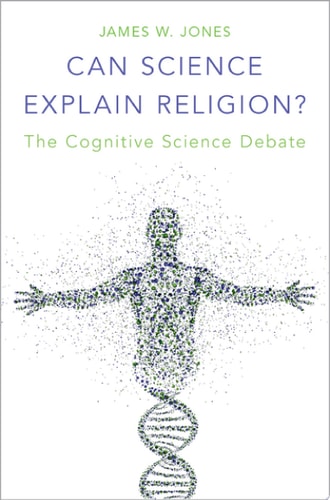
Can Science Explain Religion?: The Cognitive Science Debate
0
0
As an Amazon Associate and affiliate partner, Menrva Books earns from qualifying purchases. Learn more
Author Description
The "New Atheist" movement of recent years has put the science-versus-religion controversy back on the popular cultural agenda. Anti-religious polemicists are convinced that the application of the new sciences of the mind to religious belief gives them the final weapons in their battle against irrationality and superstition. What used to be a trickle of research papers scattered in specialized scientific journals has now become a torrent of books, articles, and commentary in the popular media pressing the case that the cognitive science of religion can finally fulfill the enlightenment dream of shrinking religion into insignificance, if not eliminating it altogether. James W. Jones argues that these claims are demonstrably false. He notes that cognitive science research is religiously neutral; it can be deployed in many different ways in relation to the actual belief in and practice of religion: to undermine it, to simply study it, and to support it. These different approaches, Jones suggests, reflect the background assumptions and viewpoints brought to the interpretation of the data. The goal of this book is not to defend either a general religious outlook or a particular religious tradition, but to make the case that while there is much to learn from the cognitive scientific study of religion, attempts to use it to "explain" religion are exaggerated and misguided. Drawing on scientific research and logical argument Can Science Explain Religion? directly confronts the claims of these debunkers of religion, providing an accessibly written, persuasive account of why they are not convincing.
Menrva's Summary
THE THESIS
This book investigates whether the cognitive science of religion provides a sufficient basis to explain away religious belief as irrational or superstitious. James W. Jones, a scholar in the psychology of religion, examines the intersection of cognitive science and theological discourse. He argues that the scientific data regarding the mind's function is inherently neutral and that attempts to use such research to invalidate religious practice are based on subjective philosophical assumptions rather than empirical necessity.
THE SCOPE MAP
What You Will Find
- Analysis of the cognitive science of religion (CSR) research field
- Critique of the New Atheist movement's interpretation of neuroscientific data
- Examination of the distinction between scientific methodology and philosophical interpretation
- Logical arguments regarding the limits of reductionist explanations for human belief
Scope Limits
- Does not attempt to provide a theological defense of any specific religious tradition
- Does not provide an exhaustive history of the cognitive science discipline
THE AUTHORITY PERSPECTIVE
Experts and readers often note that this text serves as a balanced counter-narrative to popular polemical works that claim science has definitively disproven religious belief. The prose is considered accessible to non-specialists while maintaining a rigorous academic focus on the philosophical underpinnings of scientific interpretation.
Page Count:
248
Publication Date:
2015-01-01
Publisher:
Oxford University Press
ISBN-10:
0190249404
ISBN-13:
9780190249403
Science
Religion
Atheism
Philosophy of
Psychology of Religion
Community Tags
Similar Books