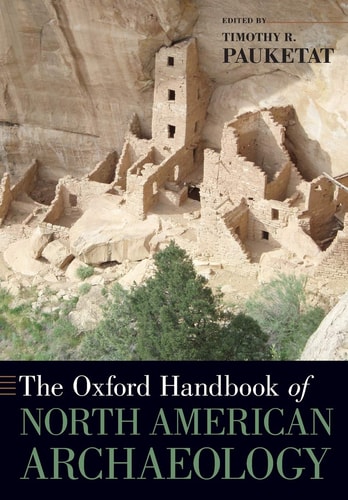
The Oxford Handbook of North American Archaeology
0
0
As an Amazon Associate and affiliate partner, Menrva Books earns from qualifying purchases. Learn more
Author Description
This volume explores 15,000 years of indigenous human history on the North American continent, drawing on the latest archaeological theories, time-honored methodologies, and rich datasets. From the Arctic south to the Mexican border and east to the Atlantic Ocean, all of the major cultural developments are covered in 53 chapters, with certain periods, places, and historical problems receiving special focus by the volume's authors. Questions like who first peopled the continent, what did it mean to have been a hunter-gatherer in the Great Basin versus the California coast, how significant were cultural exchanges between Native North Americans and Mesoamericans, and why do major historical changes seem to correspond to shifts in religion, politics, demography, and economy are brought into focus. The practice of archaeology itself is discussed as contributors wrestle with modern-day concerns with the implications of doing archaeology and its relevance for understanding ourselves today. In the end, the chapters in this book show us that the principal questions answered about human history through the archaeology of North America are central to any larger understanding of the relationships between people, cultural identities, landscapes, and the living of everyday life.
Menrva's Summary
THE THESIS
This volume investigates the 15,000-year trajectory of indigenous human history across the North American continent through the lens of contemporary archaeological theory and empirical data. Edited by Timothy R. Pauketat, the work compiles contributions from numerous scholars to synthesize major cultural developments, environmental adaptations, and socio-political shifts. The text argues that understanding the archaeological record is essential for interpreting the complex relationships between cultural identity, landscape, and human behavior.
THE SCOPE MAP
What You Will Find
- Comprehensive coverage of North American cultural history from the Arctic to the Mexican border.
- Analysis of major historical transitions in religion, politics, demography, and economy.
- Discussions on the ethics and modern relevance of archaeological practice.
Scope Limits
- The volume does not provide an exhaustive site-by-site catalog of every excavation in North America.
- It focuses primarily on indigenous history and does not extensively cover post-contact colonial archaeology.
THE AUTHORITY PERSPECTIVE
Scholars and students frequently identify this work as a foundational reference for North American archaeology due to its breadth and inclusion of diverse theoretical perspectives. The text is noted for its academic density, making it a standard resource for researchers and advanced students in the field.
Page Count:
704
Publication Date:
2015-04-01
Publisher:
Oxford University Press
ISBN-10:
0190241098
ISBN-13:
9780190241094
American History
Anthropology
Archaeology
North America
Community Tags
Other Editions(3)

Similar Books