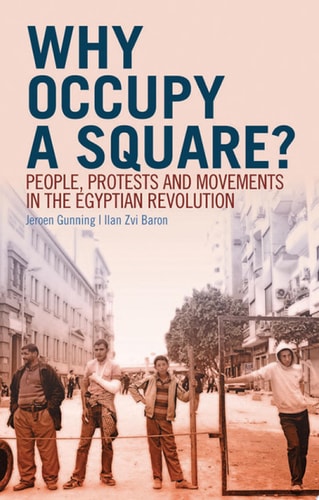
Why Occupy a Square?: People, Protests and Movements in the Egyptian Revolution
0
0
As an Amazon Associate and affiliate partner, Menrva Books earns from qualifying purchases. Learn more
Author Description
On 25 January 2011, tens of thousands of Egyptians came out on the streets to protest against emergency rule and police brutality. Eighteen days later, Mubarak, one of the longest sitting dictators in the region, had gone. How are we to make sense of these events? Was this a revolution, a revolutionary moment? How did the protests come about? How were they able to outmaneuver the police? Was this really a 'leaderless revolution,' as so many pundits claimed, or were the demonstrations an outgrowth of the protest networks that had developed over the past decade? Why did so many people with no history of activism participate? What role did economic and systemic crises play in creating the conditions for these protests to occur? Was this really a Facebook revolution?Why Occupy a Square? is a dynamic exploration of the shape and timing of these extraordinary events, the players behind them, and the tactics and protest frames they developed. Drawing on social movement theory, it traces the interaction between protest cycles, regime responses and broader structural changes over the past decade. Using theories of urban politics, space and power, it reflects on the exceptional state of non-sovereign politics that developed during the occupation of Tahrir Square.
Menrva's Summary
THE THESIS
This book investigates the structural and tactical mechanisms that enabled the 2011 Egyptian Revolution to mobilize mass participation and successfully challenge long-standing authoritarian rule. Authors Ilan Zvi Baron and Jeroen Gunning utilize social movement theory and urban political analysis to deconstruct the events of the Arab Spring in Egypt. They argue against the simplistic narrative of a 'leaderless' or 'Facebook' revolution, instead proposing that the uprising was the culmination of a decade of evolving protest networks, systemic economic crises, and strategic occupation of public space.
THE SCOPE MAP
What You Will Find
- Analysis of protest cycles and regime response dynamics in Egypt from 2001 to 2011.
- Application of urban politics theory to the occupation of Tahrir Square.
- Examination of the role of digital media versus traditional grassroots organizing.
Scope Limits
- The text does not provide a comprehensive biography of individual political leaders.
- It does not cover the long-term political aftermath or the subsequent transition of power beyond the immediate revolutionary period.
THE AUTHORITY PERSPECTIVE
Scholars and political analysts frequently cite this work for its rigorous application of social movement theory to contemporary Middle Eastern politics. It is regarded as a nuanced academic resource for those seeking to understand the organizational complexities behind the Egyptian uprising.
Page Count:
438
Publication Date:
2014-01-01
Publisher:
Oxford University Press
ISBN-10:
0190257644
ISBN-13:
9780190257644
History
Middle Eastern
Egyptian Revolution
Sociology
Middle East
European History
Community Tags
Other Editions(2)

Similar Books