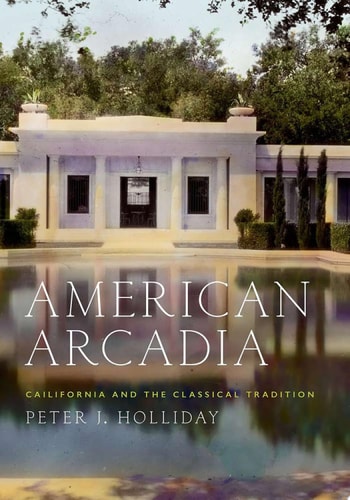
American Arcadia
0
0
As an Amazon Associate and affiliate partner, Menrva Books earns from qualifying purchases. Learn more
Author Description
A Vivid And Engaging Exploration Of California's Debt To The Ancient World Discussing The Influence Of The Classics On America Is Nothing New; Indeed, Classical Antiquity Could Be Considered Second Only To Christianity As A Force In Modeling America's National Identity. What Has Never Been Explored Until Now Is How, From The Beginning, Californians In Particular Chose To Visually And Culturally Craft Their New World Using The Rhetoric Of Classical Antiquity. Through A Lively Exploration Of Material Culture, Literature, And Architecture, American Arcadia Offers A Tour Through California's Development As A Mediterranean Haven From The Late Nineteenth Century To The Present. In Its Earliest Days, California Was Touted As The Last Opportunity For Alienated Yankees To Establish The Refined Gentleman-farmer Culture Envisioned By Jefferson And Build New Cities Free Of The Filth And Corruption Of Those They Left Back East. Through Architecture And Landscape Design Californians Fashioned An Arcadian Setting Evocative Of Ancient Greece And Rome.later, As Arcadia Gave Way To Urban Sprawl, Entire City Plans Were Drafted To Conjure Classical Antiquity, Self-styled Villas Dotted The Hills, And Utopian Communities Began To Shape The State's Social Atmosphere. Art Historian Peter J. Holliday Traces The Classical Influence Primarily Through The Evidence Of Material Culture, Yet The Book Emphasizes The Stories And People, Famous And Forgotten, Behind The Works, Such As Florence Yoch, The Renowned Landscape Designer And Set Designer For Gone With The Wind, And Sister Aimee Semple Mcpherson, The Most Publicized Christian Evangelist Of Her Day, Whose Sermons Filled The Pantheon-like Angelus Temple. Telling Stories From The Creation Of The Famed Aqueducts That Turned The Semi-arid Landscape To A Cornucopia Of Almonds, Alfalfa, And Oranges To The Birth Of The Body-sculpting Movement, American Arcadia Offers Readers A New Way Of Seeing Our Past And Ourselves.
Menrva's Summary
THE THESIS
How did California utilize the rhetoric and aesthetics of classical antiquity to construct its unique regional identity and cultural landscape? Art historian Peter J. Holliday examines the deliberate integration of Greco-Roman motifs into California's development from the late nineteenth century to the present. By analyzing material culture, architectural projects, and urban planning, the author argues that the state was intentionally fashioned as a modern Mediterranean haven to escape the perceived corruption of the American East. The text synthesizes historical narrative with visual analysis to demonstrate how classical ideals shaped both the physical environment and the social aspirations of Californians.
THE SCOPE MAP
What You Will Find
- Analysis of architectural styles and landscape design influenced by ancient Greece and Rome
- Case studies of influential figures such as landscape designer Florence Yoch and evangelist Aimee Semple McPherson
- Historical examination of infrastructure projects like the California aqueducts
- Exploration of the intersection between utopian social movements and classical aesthetics
Scope Limits
- The text focuses primarily on material culture and visual arts rather than a comprehensive political history of the state
- The analysis is geographically restricted to California and its specific regional development
THE AUTHORITY PERSPECTIVE
Experts and readers recognize this work as a specialized contribution to the study of American regional identity and the reception of classical antiquity. The prose is noted for its accessibility, effectively balancing academic rigor with engaging storytelling regarding the individuals who shaped the California landscape.
Page Count:
400
Publication Date:
2016-01-01
Publisher:
Oxford University Press
ISBN-10:
0190256524
ISBN-13:
9780190256524
Architecture
History
California history
Art History
Community Tags
Similar Books