Author Description
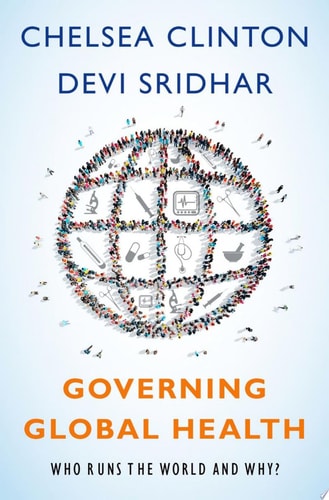
The past few decades have seen a massive increase in the number of international organizations focusing on global health. Campaigns to eradicate or stem the spread of AIDS, SARS, malaria, and Ebola attest to the increasing importance of globally-oriented health organizations. These organizations may be national, regional, international, or even non-state organizations-like Medicins Sans Frontieres. One of the more important recent trends in global health governance, though, has been the rise of public-private partnerships (PPPs) where private non-governmental organizations, for-profit enterprises, and various other social entrepreneurs work hand-in-hand with governments to combat specific maladies. A primary driver for this development is the widespread belief that by joining together, PPPs will attack health problems and fund shared efforts more effectively than other systems. As Chelsea Clinton and Devi Sridhar show in Governing Global Health, these partnerships are not only important for combating infectious diseases; they also provide models for developing solutions to a host of other serious global health challenges and questions beyond health. But what do we actually know about the accountability and effectiveness of PPPs in relation to the traditional multilaterals? According to Clinton and Sridhar, we have known very little because scholars have not accumulated enough data or developed effective ways to assess them-until now. In their analysis, they uncovered both strength and weaknesses of the model. Using principal-agent theory in which governments are the principals directing international agents of various type, they take a closer look at two major PPPs-the Global Fund to Fight HIV/AIDS, TB and Malaria and the GAVI Alliance-and two major more traditional international organizations-the World Health Organization and the World Bank. An even-handed and thorough empirical analysis of one of the most pressing topics in world affairs, Governing Global Health will be a vital resource for students and policy makers alike.
Menrva's Summary
THE THESIS
This work investigates the accountability and effectiveness of public-private partnerships (PPPs) in the landscape of global health governance. Chelsea Clinton, a prominent advocate for global health, and Devi Sridhar, a professor of global public health, utilize principal-agent theory to evaluate how various international organizations address health crises. By analyzing the structural dynamics between governments and their agents, the authors provide a framework for understanding how these entities function and whether they deliver on their stated objectives.
THE SCOPE MAP
What You Will Find
- Comparative analysis of two major PPPs: the Global Fund and the GAVI Alliance.
- Evaluation of traditional international organizations: the World Health Organization and the World Bank.
- Application of principal-agent theory to assess organizational performance.
- Empirical data regarding the efficacy of multi-stakeholder health initiatives.
Scope Limits
- The analysis is restricted to the specific organizations mentioned and does not cover every existing global health entity.
- The book focuses primarily on the governance and accountability structures rather than clinical medical outcomes.
THE AUTHORITY PERSPECTIVE
Experts and scholars in international relations recognize this text as a rigorous empirical contribution to the study of global health governance. Readers frequently note that the authors provide a balanced, data-driven assessment that clarifies the complex interactions between public and private actors in the international sphere.
Page Count:
300
Publication Date:
2017-01-01
Publisher:
Oxford University Press
ISBN-10:
0190253290
ISBN-13:
9780190253295
Public Health
Allied Health
Medical
Public Private Partnerships
Public Policy
International relations
World Health
Community Tags
Similar Books



Reader Comments
Share Your Thoughts
No comments yet. Be the first to share your thoughts!