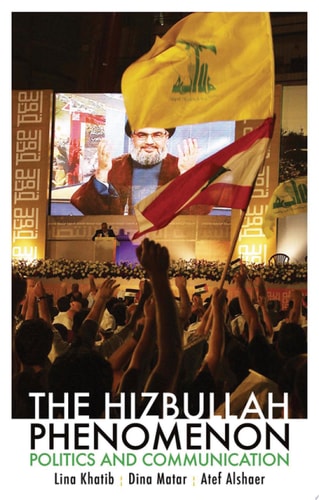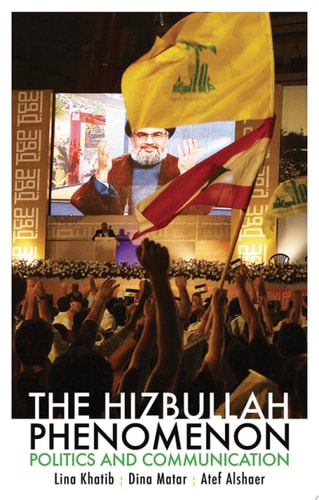
The Hizbullah Phenomenon: Politics and Communication
0
0
As an Amazon Associate and affiliate partner, Menrva Books earns from qualifying purchases. Learn more
Author Description
Hizbullah is not only a leading political actor in Lebanon and a dynamic force in the Middle East, but it is also distinguished by a sophisticated communication strategy. From relatively humble beginnings in the 1980s, Hizbullah's political clout and its public perception have followed an upward trajectory, thanks to a political programme that blends military, social, economic and religious elements and adapts to changes in its environment. Its communication strategy is similarly adaptive, supporting the group's political objectives. Hizbullah's target audience has expanded to a regional and global viewership. Its projected identity, too, shifted from an Islamist resistance party opposed to Israel's presence in Lebanon to a key player within the Lebanese state. At the same time, Hizbullah's image has retained fixed features, including its image as an ally of Iran; its role as a resistance group (to Israel); and its original base as a religious party representative of the Lebanese Shiites. The authors of this book address how Hizbullah uses image, language and its charismatic leader, Hassan Nasrallah, to legitimise its political aims and ideology and appeal to different target groups.
Menrva's Summary
THE THESIS
This book investigates how Hizbullah utilizes sophisticated communication strategies and image management to maintain its political influence and ideological legitimacy within Lebanon and the broader Middle East. The authors, Atef Alshaer, Dina Matar, and Lina Khatib, draw upon their expertise in media, politics, and regional studies to analyze the group's evolution. By examining the intersection of military, social, and religious programming, the text argues that Hizbullah's success is rooted in its ability to adapt its public identity while maintaining core ideological pillars. The research provides a framework for understanding how the organization balances its role as a state actor with its identity as a resistance movement.
THE SCOPE MAP
What You Will Find
- Analysis of Hizbullah's communication strategies from the 1980s to the present
- Examination of the role of Hassan Nasrallah as a charismatic political figure
- Study of the shift in public identity from an Islamist resistance party to a key state player
- Evaluation of media usage and linguistic framing in political messaging
Scope Limits
- The text does not provide a comprehensive military history of the organization
- It does not focus on internal organizational logistics outside of public-facing communication
THE AUTHORITY PERSPECTIVE
Experts in Middle Eastern politics recognize this work as a significant contribution to the study of non-state political actors and their media operations. Readers frequently note the academic rigor of the analysis and the clarity with which the authors connect communication theory to regional political realities.
Page Count:
238
Publication Date:
2014-01-01
Publisher:
Oxford University Press
ISBN-10:
019025758X
ISBN-13:
9780190257583
History
International relations
Sociology
Middle Eastern
Communication Studies
Community Tags
Similar Books