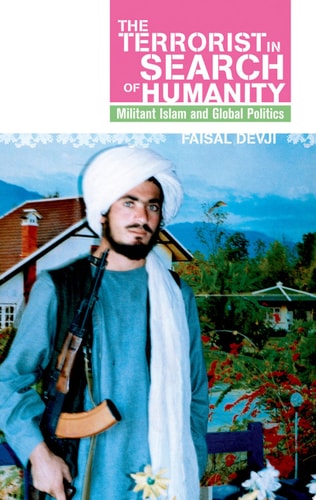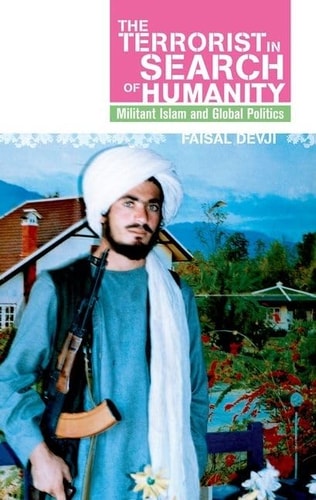
Terrorist in Search of Humanity: Militant Islam and Global Politics
0
0
As an Amazon Associate and affiliate partner, Menrva Books earns from qualifying purchases. Learn more
Author Description
Faisal Devji argues that new forms of militancy, such as the actions of al-Qaeda, are informed by the same desire for agency and equality that animates other humanitarian interventions, such as environmentalism and pacifism. To the militant, victimized Muslims are more than just symbols of ethnic and religious persecution-they represent humanity's centuries-long struggle for legitimacy and agency. Acts of terror, therefore, are fueled by the militant's desire to become a historical actor on the global stage. Though they have yet to build concrete political institutions, militant movements have formed a kind of global society, and as Devji makes clear, this society pursues the same humanitarian objectives that drive more benevolent groups.
Menrva's Summary
THE THESIS
This book investigates whether contemporary militant Islamic movements, such as al-Qaeda, are driven by the same universalist humanitarian impulses that motivate secular global political movements. Faisal Devji, a historian and scholar of South Asian and Islamic studies, utilizes a framework of political philosophy to analyze the rhetoric and actions of militants. He argues that these groups seek agency and legitimacy on the global stage, positioning themselves as actors within a broader, albeit unconventional, global society. By examining the militant's self-conception, Devji challenges the traditional view of terrorism as purely irrational or exclusively religious in nature.
THE SCOPE MAP
What You Will Find
- Analysis of the ideological parallels between militant Islam and humanitarian movements like environmentalism.
- Examination of the concept of the 'global ummah' as a political society rather than a purely religious one.
- Theoretical exploration of agency, victimhood, and historical legitimacy in the context of modern conflict.
Scope Limits
- The text does not provide a comprehensive history of specific terrorist attacks or tactical military operations.
- It does not focus on the internal theological debates within traditional Islamic jurisprudence.
THE AUTHORITY PERSPECTIVE
Scholars and political analysts frequently note the dense, theoretical nature of Devji's prose, which prioritizes philosophical inquiry over empirical policy analysis. Experts often cite this work as a significant contribution to understanding the political logic of non-state actors, though some critics argue that the comparison to humanitarianism remains highly provocative and controversial.
Page Count:
224
Publication Date:
2020-01-01
Publisher:
Oxford University Press
ISBN-10:
0190076801
ISBN-13:
9780190076801
History
Politics
Sociology
Middle East
Middle Eastern
International relations
World politics
Islam
New Used & Rental Textbooks
Politics & Government
Specific Topics