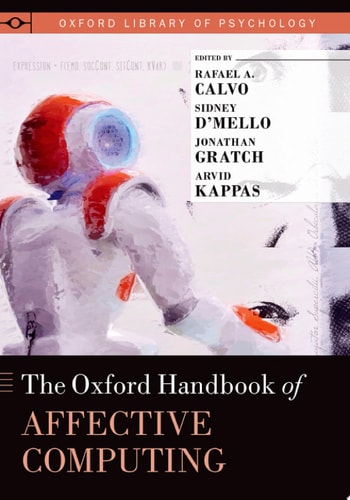
The Oxford Handbook of Affective Computing
0
0
As an Amazon Associate and affiliate partner, Menrva Books earns from qualifying purchases. Learn more
Author Description
Affective Computing is a growing multidisciplinary field encompassing computer science, engineering, psychology, education, neuroscience, and many other disciplines. It explores how affective factors influence interactions between humans and technology, how affect sensing and affect generation techniques can inform our understanding of human affect, and on the design, implementation, and evaluation of systems that intricately involve affect at their core.The Oxford Handbook of Affective Computing will help both new and experienced researchers identify trends, concepts, methodologies, and applications in this burgeouning field. The volume features 41 chapters divided into five main sections: history and theory, detection, generation, methodologies, and applications. Section One begins with a look at the makings of AC and a historical review of the science of emotion. Chapters discuss the theoretical underpinnings of AC from an interdisciplinary perspective involving the affective, cognitive, social, media, and brain sciences. Section Two focuses on affect detection or affect recognition, which is one of the most commonly investigated areas in AC. Section Three examines aspects of affect generation including the synthesis of emotion and its expression via facial features, speech, postures and gestures. Cultural issues in affect generation are also discussed. Section Four features chapters on methodological issues in AC research, including data collection techniques, multimodal affect databases, emotion representation formats, crowdsourcing techniques, machine learning approaches, affect elicitation techniques, useful AC tools, and ethical issues in AC. Finally, Section Five highlights existing and future applications of AC in domains such as formal and informal learning, games, robotics, virtual reality, autism research, healthcare, cyberpsychology, music, deception, reflective writing, and cyberpsychology.With chapters authored by world leaders in each area, The Oxford Handbook of Affective Computing is a comprehensive reference for researchers and students.
Menrva's Summary
THE THESIS
This volume investigates the multidisciplinary intersection of computer science, psychology, and neuroscience to define the current state and future trajectory of affective computing. The editors, Jonathan Matthew Gratch, Rafael A. Calvo, and Sidney D'Mello, curate contributions from international experts to establish a comprehensive framework for understanding how technology can sense, interpret, and simulate human emotion. The text synthesizes theoretical foundations with practical implementation strategies to address the complexities of human-machine interaction.
THE SCOPE MAP
What You Will Find
- Historical development and theoretical underpinnings of emotion science
- Methodologies for affect detection and recognition
- Techniques for affect generation, including facial synthesis and gesture modeling
- Research protocols involving machine learning, multimodal databases, and ethical considerations
- Application domains including robotics, healthcare, education, and virtual reality
Scope Limits
- Does not provide a singular, unified theory of emotion, but rather a collection of interdisciplinary perspectives
- Focuses primarily on technical and psychological research rather than consumer-facing product manuals
THE AUTHORITY PERSPECTIVE
Experts identify this volume as a foundational reference for researchers and practitioners working at the intersection of technology and human emotion. Readers frequently note the academic density of the prose, which serves as a comprehensive survey of the field's current methodologies and challenges.
Page Count:
624
Publication Date:
2014-01-01
Publisher:
Oxford University Press
ISBN-10:
0190251506
ISBN-13:
9780190251505
Psychology
Engineering
Professional Career & Trade
Computer Science
Neuroscience
Human Interaction
Community Tags
Similar Books




Reader Comments
Share Your Thoughts
No comments yet. Be the first to share your thoughts!