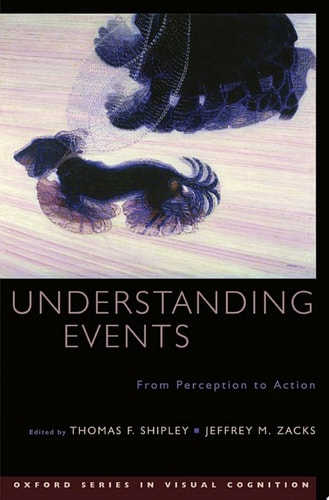
Understanding Events: From Perception to Action
0
0
As an Amazon Associate and affiliate partner, Menrva Books earns from qualifying purchases. Learn more
Author Description
We effortlessly recognize all sorts of events--from simple events like people walking to complex events like leaves blowing in the wind. We can also remember and describe these events, and in general, react appropriately to them, for example, in avoiding an approaching object. Our phenomenal ease interacting with events belies the complexity of the underlying processes we use to deal with them. Driven by an interest in these complex processes, research on event perception has been growing rapidly. Events are the basis of all experience, so understanding how humans perceive, represent, and act on them will have a significant impact on many areas of psychology. Unfortunately, much of the research on event perception--in visual perception, motor control, linguistics, and computer science--has progressed without much interaction. This volume is the first to bring together computational, neurological, and psychological research on how humans detect, classify, remember, and act on events. The book will provide professional and student researchers with a comprehensive collection of the latest research in these diverse fields.
Menrva's Summary
THE THESIS
This volume investigates the complex cognitive, neurological, and computational mechanisms that allow humans to perceive, categorize, and act upon events in their environment. The authors, Jeffrey M. Zacks and Thomas F. Shipley, synthesize interdisciplinary research to address how the brain translates continuous sensory input into discrete, meaningful units of experience. By bridging gaps between motor control, linguistics, and visual perception, the text establishes a unified framework for understanding the fundamental nature of human experience.
THE SCOPE MAP
What You Will Find
- Computational models of event segmentation and representation
- Neurological evidence regarding brain activity during event perception
- Psychological studies on memory and action planning
- Cross-disciplinary synthesis of motor control and linguistic theories
Scope Limits
- The text does not provide a general introduction to cognitive psychology for laypeople
- It focuses primarily on visual and motor-related events rather than abstract or purely social event cognition
THE AUTHORITY PERSPECTIVE
Experts recognize this volume as a foundational interdisciplinary resource for researchers and graduate students in cognitive science. Readers frequently note the academic density of the prose, which is tailored specifically for those already familiar with experimental psychology and neuroscience methodologies.
Page Count:
732
Publication Date:
2008-01-01
Publisher:
Oxford University Press
ISBN-10:
0190293314
ISBN-13:
9780190293314
Psychology
Neuroscience
Linguistics
English & College Success
English
Academic
Computer Science
Community Tags
Other Editions(3)


Similar Books