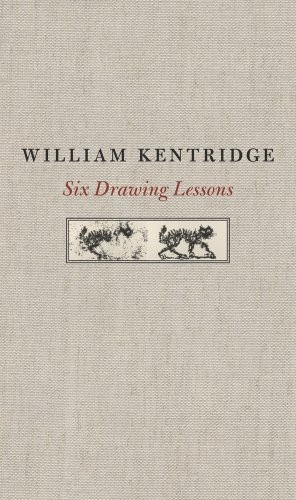
Six Drawing Lessons
0
0
As an Amazon Associate and affiliate partner, Menrva Books earns from qualifying purchases. Learn more
Author Description
Overview: Over the last three decades, the visual artist William Kentridge has garnered international acclaim for his work across media including drawing, film, sculpture, printmaking, and theater. Rendered in stark contrasts of black and white, his images reflect his native South Africa and, like endlessly suggestive shadows, point to something more elemental as well. Based on the 2012 Charles Eliot Norton Lectures, Six Drawing Lessons is the most comprehensive collection available of Kentridge's thoughts on art, art-making, and the studio. Art, Kentridge says, is its own form of knowledge. It does not simply supplement the real world, and it cannot be purely understood in the rational terms of traditional academic disciplines. The studio is the crucial location for the creation of meaning: the place where linear thinking is abandoned and the material processes of the eye, the hand, the charcoal and paper become themselves the guides of creativity. Drawing has the potential to educate us about the most complex issues of our time. This is the real meaning of "drawing lessons." Incorporating elements of graphic design and ranging freely from discussions of Plato's cave to the Enlightenment's role in colonial oppression to the depiction of animals in art, Six Drawing Lessons is an illustration in print of its own thesis of how art creates knowledge. Foregrounding the very processes by which we see, Kentridge makes us more aware of the mechanisms-and deceptions-through which we construct meaning in the world.
Menrva's Summary
THE THESIS
Art is its own form of knowledge, distinct from traditional academic disciplines. William Kentridge, an internationally acclaimed visual artist, argues that the studio is the essential site for meaning creation, where linear thinking is abandoned and the material processes of art-making guide creativity. This book, based on his Charles Eliot Norton Lectures, explores how drawing can illuminate complex contemporary issues, drawing connections from Plato's cave to colonial oppression and animal depiction. Through foregrounding the processes of seeing, Kentridge reveals the mechanisms and deceptions through which we construct meaning.
THE SCOPE MAP
- Kentridge's thoughts on art, art-making, and the studio.
- Discussions on art as a form of knowledge distinct from rational understanding.
- Exploration of the studio as a site for creative meaning-making.
- The potential of drawing to address complex contemporary issues.
- Connections to Plato's cave, Enlightenment's role in colonial oppression, and animal depiction in art.
- An illustration of the thesis that art creates knowledge through its processes.
THE AUTHORITY PERSPECTIVE
Based on the provided description, 'Six Drawing Lessons' is presented as a significant exploration of art's unique epistemological role, drawing from William Kentridge's extensive experience and lectures. The book is framed as a comprehensive collection of his thoughts, integrating diverse references from philosophy to history to illustrate its central thesis. The reception, as suggested by the material, would likely highlight its intellectual depth and the artist's distinctive perspective on creativity and knowledge construction. It appears to be a text aimed at those interested in the theoretical underpinnings of art and the creative process.
Page Count:
208
Publication Date:
2014-01-01
ISBN-10:
0674365801
ISBN-13:
9780674365803
Non-Fiction
Philosophy
History
Art
Community Tags
Similar Books