Author Description
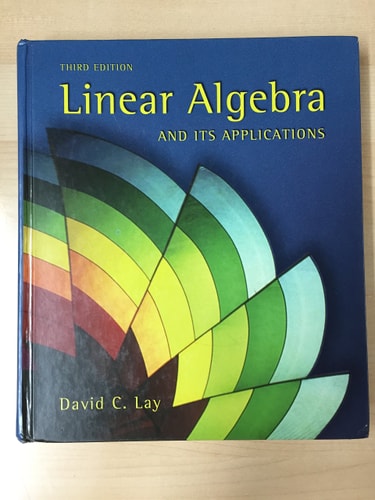
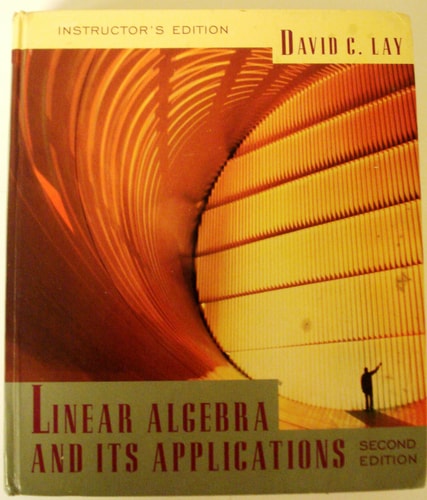
NOTE: This edition features the same content as the traditional text in a convenient, three-hole-punched, loose-leaf version. Books a la Carte also offer a great value--this format costs significantly less than a new textbook. Before purchasing, check with your instructor or review your course syllabus to ensure that you select the correct ISBN. Several versions of Pearson's MyLab & Mastering products exist for each title, including customized versions for individual schools, and registrations are not transferable. In addition, you may need a CourseID, provided by your instructor, to register for and use Pearson's MyLab & Mastering products.xxxxxxxxxxxxxxxFor courses in linear algebra. With traditional linear algebra texts, the course is relatively easy for students during the early stages as material is presented in a familiar, concrete setting. However, when abstract concepts are introduced, students often hit a wall. Instructors seem to agree that certain concepts (such as linear independence, spanning, subspace, vector space, and linear transformations) are not easily understood and require time to assimilate. These concepts are fundamental to the study of linear algebra, so students' understanding of them is vital to mastering the subject. This text makes these concepts more accessible by introducing them early in a familiar, concrete Rn setting, developing them gradually, and returning to them throughout the text so that when they are discussed in the abstract, students are readily able to understand. Also available with MyMathLab MyMathLab is an online homework, tutorial, and assessment program designed to work with this text to engage students and improve results. MyMathLab includes assignable algorithmic exercises, the complete eBook, interactive figures, tools to personalize learning, and more.
Menrva's Summary
THE THESIS
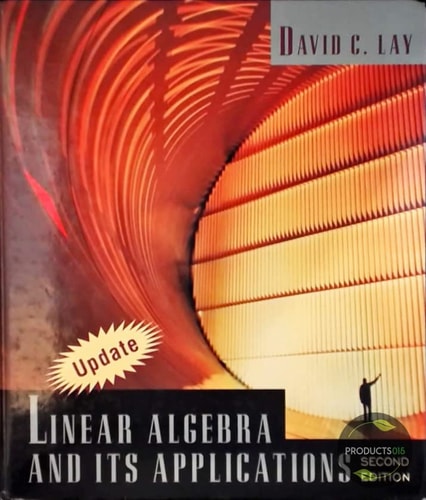
This text investigates how to bridge the gap between concrete computational methods and abstract theoretical concepts in undergraduate linear algebra. David C. Lay, a recognized educator in the field, utilizes a pedagogical framework that introduces complex topics like vector spaces and linear transformations within familiar settings before transitioning to abstract proofs. By scaffolding these concepts through iterative exposure, the author aims to improve student retention and conceptual mastery.
THE SCOPE MAP
What You Will Find
- Comprehensive coverage of linear independence, spanning, and subspaces.
- A pedagogical methodology that prioritizes concrete Rn settings before abstract theory.
- Integration with MyMathLab for algorithmic exercises and interactive learning tools.
- Systematic reinforcement of core concepts throughout the curriculum.
THE AUTHORITY PERSPECTIVE
Instructors and students frequently identify this text as a standard, accessible resource for introductory linear algebra courses. Experts highlight the author's successful balance of computational practice and theoretical rigor as a primary reason for its widespread adoption in academic settings.
Page Count:
573
Publication Date:
1999-01-01
Publisher:
Addison Wesley
ISBN-10:
0201824795
ISBN-13:
9780201824797
Science
Education
Linear Algebra
textbook
Mathematics
Community Tags
Similar Books