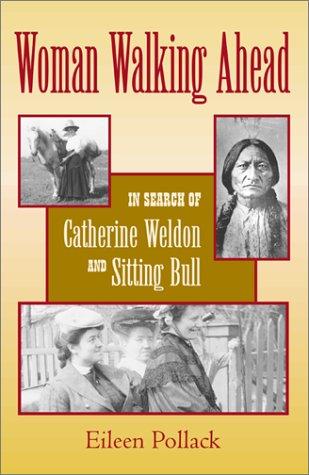
Woman Walking Ahead
0
0
As an Amazon Associate and affiliate partner, Menrva Books earns from qualifying purchases. Learn more
Author Description
This book restores a little-known advocate of Indian rights to her place in history. In June 1889, a widowed Brooklyn artist named Catherine Weldon traveled to the Standing Rock Reservation in Dakota Territory to help Sitting Bull hold onto land that the government was trying to wrest from his people. Since the Sioux chieftain could neither read nor write English, he welcomed the white woman's offer to act as his secretary and lobbyist. Her efforts were counterproductive; she was ordered to leave the reservation, and the Standing Rock Sioux were bullied into signing away their land. But she returned with her teen-age son, settling at Sitting Bull's camp on the Grand River. In recognition of her unusual qualities, Sitting Bull's people called her Toka heya mani win, Woman Walking Ahead. Predictably, the press vilified Weldon, calling her "Sitting Bull's white squaw" and accusing her of inciting Sitting Bull to join the Ghost Dance religion then sweeping the West. In fact, Weldon opposed the movement, arguing that the army would use the Ghost Dance as an excuse to jail or kill Sitting Bull. Unfortunately she was right. Up to now, history has distorted and largely overlooked Weldon's story. In retracing Weldon's steps, Eileen Pollack recovers her life and compares her world to our own. Weldon's moving struggle is a classic example of the misunderstandings that can occur when a white woman attempts to build friendships across cultural lines and assist the members of an oppressed minority fighting for their rights.--BOOK JACKET.
Menrva's Summary
THE THESIS
The book examines the life and activism of Catherine Weldon, a white woman who became an advocate for Native American rights in the late 19th century. Weldon, an artist from Brooklyn, traveled to the Standing Rock Reservation in 1889 to assist Sitting Bull, who was struggling to retain his people's land against government pressure. Despite her efforts being initially counterproductive and leading to her expulsion, she returned and settled near Sitting Bull's camp, earning the name Toka heya mani win, Woman Walking Ahead, from his people. The narrative explores the cultural misunderstandings and challenges she faced in her attempts to bridge divides and support an oppressed minority.
THE SCOPE MAP
- Restores Catherine Weldon, an advocate for Indian rights, to her historical place.
- Details Weldon's efforts to help Sitting Bull retain land at Standing Rock Reservation.
- Explores the press vilification of Weldon and her opposition to the Ghost Dance movement.
- Compares Weldon's world and struggles to contemporary issues of cultural misunderstanding.
- Analyzes the complexities of cross-cultural friendships and assistance to oppressed minorities.
- Traces Weldon's life from her arrival in Dakota Territory to her settlement at Sitting Bull's camp.
THE AUTHORITY PERSPECTIVE
This biography recovers the largely overlooked story of Catherine Weldon, highlighting her significant, though ultimately counterproductive, advocacy for the Standing Rock Sioux. The book is noted for retracing Weldon's steps and comparing her historical context to contemporary issues of cultural misunderstanding and cross-cultural relations. It presents her struggle as a classic example of the difficulties encountered when attempting to assist marginalized groups. The work aims to restore Weldon's place in history and illuminate the complexities of her relationship with Sitting Bull and his people.
Page Count:
360
Publication Date:
2002-01-01
ISBN-10:
082632844X
ISBN-13:
9780826328441
History
Non-Fiction
Biography
Community Tags
Similar Books