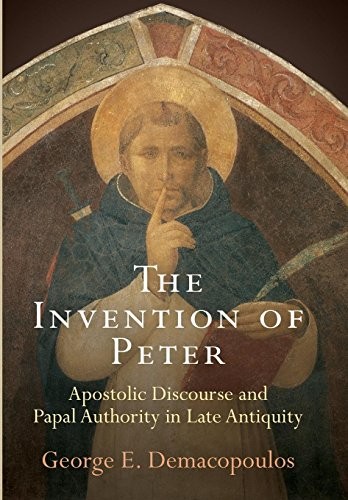
The Invention of Peter: Apostolic Discourse and Papal Authority in Late Antiquity
0
0
As an Amazon Associate and affiliate partner, Menrva Books earns from qualifying purchases. Learn more
Author Description
On the first anniversary of his election to the papacy, Leo the Great stood before the assembly of bishops convening in Rome and forcefully asserted his privileged position as the heir of Peter the Apostle. This declaration marked the beginning of a powerful tradition: the Bishop of Rome would henceforth leverage the cult of St. Peter, and the popular association of St. Peter with the city itself, to his advantage. In The Invention of Peter, George E. Demacopoulos examines this Petrine discourse, revealing how the link between the historic Peter and the Roman Church strengthened, shifted, and evolved during the papacies of two of the most creative and dynamic popes of late antiquity, ultimately shaping medieval Christianity as we now know it. By emphasizing the ways in which this rhetoric of apostolic privilege was employed, extended, transformed, or resisted between the reigns of Leo the Great and Gregory the Great, Demacopoulos offers an alternate account of papal history that challenges the dominant narrative of an inevitable and unbroken rise in papal power from late antiquity through the Middle Ages. He unpacks escalating claims to ecclesiastical authority, demonstrating how this rhetoric, which almost always invokes a link to St. Peter, does not necessarily represent actual power or prestige but instead reflects moments of papal anxiety and weakness. Through its nuanced examination of an array of episcopal activity—diplomatic, pastoral, political, and administrative—The Invention of Peter offers a new perspective on the emergence of papal authority and illuminates the influence that Petrine discourse exerted on the survival and exceptional status of the Bishop of Rome.
Menrva's Summary
THE THESIS
This book investigates the historical development and rhetorical construction of papal authority in late antiquity, specifically focusing on the papacies of Leo the Great and Gregory the Great. George E. Demacopoulos examines how these influential popes leveraged the figure of Saint Peter and the city of Rome to assert and shape their ecclesiastical power. The work challenges the traditional narrative of an unbroken rise in papal power by demonstrating how claims to apostolic privilege often masked moments of papal anxiety and weakness. Through an analysis of diplomatic, pastoral, political, and administrative activities, the book offers a nuanced perspective on the emergence of the Bishop of Rome's exceptional status.
THE SCOPE MAP
- Analysis of Petrine discourse and its role in papal claims to authority.
- Examination of the papacies of Leo the Great and Gregory the Great.
- Challenges the dominant narrative of inevitable papal power growth.
- Explores how rhetoric of apostolic privilege reflected papal anxiety and weakness.
- Investigates episcopal activity including diplomatic, pastoral, political, and administrative actions.
- Focuses on the period of late antiquity and its influence on medieval Christianity.
THE AUTHORITY PERSPECTIVE
The Invention of Peter offers a significant re-evaluation of papal history in late antiquity, challenging established narratives of continuous power ascent. By focusing on the rhetorical strategies employed by popes like Leo the Great and Gregory the Great, Demacopoulos reveals how claims to apostolic authority were often intertwined with moments of vulnerability. The book's detailed examination of episcopal activities provides a nuanced understanding of the complex factors that contributed to the exceptional status of the Bishop of Rome. This work is likely to be of interest to scholars of late antique religion, church history, and the history of the papacy.
Page Count:
272
Publication Date:
2013-01-01
ISBN-10:
0812245172
ISBN-13:
9780812245172
History
Religion
Non-Fiction
Christianity
Papacy
Late Antiquity
Community Tags
Similar Books