Consuming Identities: Visual Culture in Nineteenth-Century San Francisco
0
0
As an Amazon Associate and affiliate partner, Menrva Books earns from qualifying purchases. Learn more
Author Description
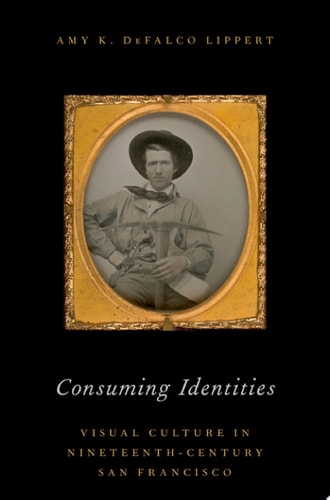
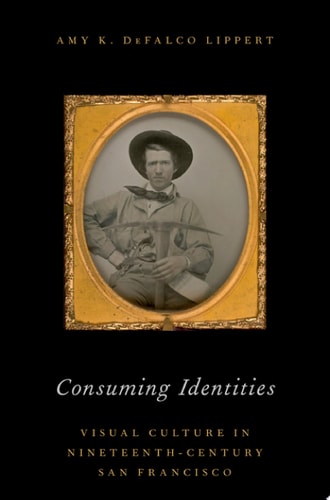
Along with the rapid expansion of the market economy and industrial production methods, such innovations as photography, lithography, and steam printing created a pictorial revolution in nineteenth-century society. The proliferation of visual prints, ephemera, spectacles, and technologies transformed public values and perceptions, and its legacy was as significant as the print revolution that preceded it. Consuming Identities explores the significance of the pictorial revolution in one of its vanguard cities: San Francisco, the revolving door of the gold rush. In their correspondence, diaries, portraits, and reminiscences, thousands of migrants to the city by the Bay demonstrated that visual media constituted a central means by which people navigated the bewildering host of changes taking hold around them in the second half of the nineteenth century, from the spread of capitalism and class formation to immigration and urbanization. Images themselves were inextricably associated with these world-changing forces; they were commodities, but as representations of people, they also possessed special cultural qualities that gave them new meaning and significance. Visual media transcended traditional boundaries of language and culture that divided diverse groups within the same urban space. From the 1848 conquest of California and the gold discovery to the disastrous earthquake and fire of 1906, San Francisco anticipated broader cultural transformations in the commodification, implementation, and popularity of images. For the city's inhabitants and sojourners, an array of imagery came to mediate, intersect with, and even constitute social interaction in a world where virtual reality was becoming normative.
Menrva's Summary
THE THESIS
This book investigates how the rapid proliferation of visual media in nineteenth-century San Francisco functioned as a primary mechanism for social navigation and identity formation during a period of intense urban and economic change. Amy DeFalco Lippert, a historian specializing in American visual culture, utilizes a diverse array of primary sources—including diaries, correspondence, and portraiture—to argue that images were not merely passive commodities but active agents in shaping class, immigration, and urban experience. The work posits that the visual revolution in this specific frontier city served as a precursor to modern mediated social interactions.
THE SCOPE MAP
What You Will Find
- Analysis of the impact of photography, lithography, and steam printing on public perception.
- Examination of the role of visual media in bridging cultural and linguistic divides among diverse migrant populations.
- Case studies of San Francisco's development from the 1848 gold discovery to the 1906 earthquake.
Scope Limits
- The study is geographically confined to San Francisco and does not provide a comprehensive national history of American visual culture.
- The analysis focuses primarily on the second half of the nineteenth century.
THE AUTHORITY PERSPECTIVE
Scholars frequently cite this work for its nuanced integration of material culture and social history, noting the author's ability to connect technological innovation with individual human experience. Experts highlight this as a significant contribution to the study of urban identity and the history of media in the American West.
Page Count:
416
Publication Date:
2018-01-01
Publisher:
Oxford University Press
ISBN-10:
0190268999
ISBN-13:
9780190268992
History
Photography
Visual Culture
Nineteenth century
Special Topics
Media Studies
American History
San Francisco
Community Tags
Similar Books