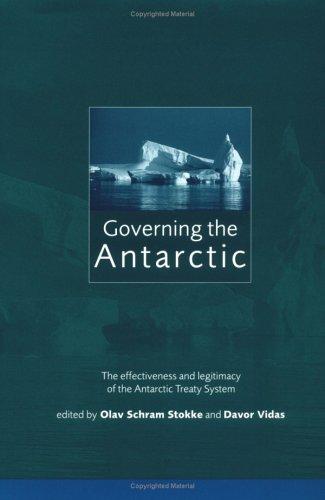
Governing the Antarctic
0
0
As an Amazon Associate and affiliate partner, Menrva Books earns from qualifying purchases. Learn more
Author Description
After thirty-five years, the regime based on the Antarctic Treaty is more vigorous than ever. Here leading scholars of international law and international relations examine the effectiveness and legitimacy of this regime by asking two questions: are current changes affecting the ability of this regime to cope with major problems in the region, and how do those changes affect its standing among parties to the Treaty and in the wider international community? Individual chapters deal with Antarctic regimes for marine living resources, mineral activities, environmental protection and tourism. Throughout, a keen eye is kept on how these components interact and reinforce each other. This analysis is supported by in-depth studies of compatibility and tension between the Antarctic Treaty System and the international community at large. It also draws upon case studies of how domestic concerns and decision-making in four selected countries affect international cooperation in the Antarctic.
Menrva's Summary
THE THESIS
The Antarctic Treaty System, established thirty-five years ago, faces evolving challenges to its effectiveness and legitimacy. This book brings together leading scholars to analyze how current changes impact the regime's ability to address major regional problems, such as marine living resources, mineral activities, environmental protection, and tourism. It investigates the interplay between these components and the compatibility of the Antarctic Treaty System with the broader international community. Furthermore, the analysis incorporates case studies examining the influence of domestic concerns and decision-making processes in four countries on international cooperation in the Antarctic.
THE SCOPE MAP
- Analysis of the effectiveness and legitimacy of the Antarctic Treaty System.
- Examination of current changes affecting the regime's problem-coping abilities.
- Assessment of the impact of changes on the regime's standing among parties and the international community.
- Detailed chapters on regimes for marine living resources, mineral activities, environmental protection, and tourism.
- Exploration of the interaction and reinforcement between different Antarctic regime components.
- In-depth studies on the compatibility and tension between the Antarctic Treaty System and the international community.
- Case studies on how domestic concerns and decision-making in four selected countries influence international cooperation in the Antarctic.
THE AUTHORITY PERSPECTIVE
The book examines the enduring vigor of the Antarctic Treaty regime after thirty-five years, posing critical questions about its effectiveness and legitimacy in the face of contemporary changes. It delves into specific areas like resource management, environmental protection, and tourism, analyzing their interconnectedness and their relationship with the wider international community. The inclusion of domestic case studies offers a nuanced perspective on how national interests shape global cooperation in the region. The analysis suggests a comprehensive look at the challenges and strengths of Antarctic governance.
Page Count:
486
Publication Date:
1997-01-01
ISBN-10:
0521572371
ISBN-13:
9780521572378
Non-Fiction
Science
Politics
International Law
International relations
Community Tags
Similar Books