Author Description
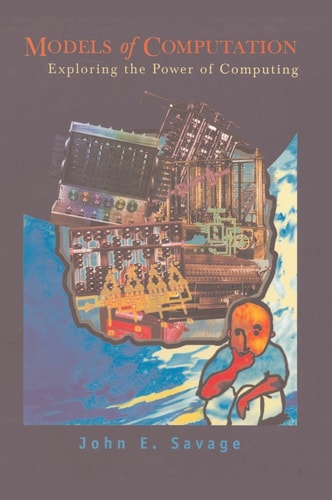
In Models of Computation: Exploring the Power of Computing, John Savage re-examines theoretical computer science, offering a fresh approach that gives priority to resource tradeoffs and complexity classifications over the structure of machines and their relationships to languages. This viewpoint reflects a pedagogy motivated by the growing importance of computational models that are more realistic than the abstract ones studied in the 1950s, '60s and early '70s. Assuming only some background in computer organization, Models of Computation uses circuits to simulate machines with memory, thereby making possible an early discussion of P-complete and NP-complete problems. Circuits are also used to demonstrate that tradeoffs between parameters of computation, such as space and time, regulate all computations by machines with memory. Full coverage of formal languages and automata is included along with a substantive treatment of computability. Topics such as space-time tradeoffs, memory hierarchies, parallel computation, and circuit complexity, are integrated throughout the text with an emphasis on finite problems and concrete computational models
Menrva's Summary
THE THESIS
This text investigates the fundamental limits and resource requirements of computation by prioritizing complexity classifications and parameter tradeoffs over traditional machine-centric models. John E. Savage, a professor of computer science, utilizes his extensive academic background to present a pedagogical framework that emphasizes realistic computational models. By employing circuit-based simulations, the author provides a rigorous analysis of space-time tradeoffs and complexity classes, moving beyond the abstract models prevalent in mid-20th-century computer science education.
THE SCOPE MAP
What You Will Find
- Comprehensive analysis of P-complete and NP-complete problem sets.
- Methodologies for using circuits to simulate machines with memory.
- Integration of space-time tradeoffs and memory hierarchy constraints.
- Formal treatment of automata theory and computability concepts.
THE AUTHORITY PERSPECTIVE
Experts recognize this work as a significant pedagogical shift in theoretical computer science, favoring concrete models over purely abstract ones. Readers frequently note the academic density of the prose, which serves as a foundational resource for students and researchers focusing on computational complexity.
Page Count:
672
Publication Date:
1998-01-01
Publisher:
Addison-Wesley
ISBN-10:
0201895390
ISBN-13:
9780201895391
Mathematics
Algorithms
Computer Science
textbook
Community Tags
Similar Books