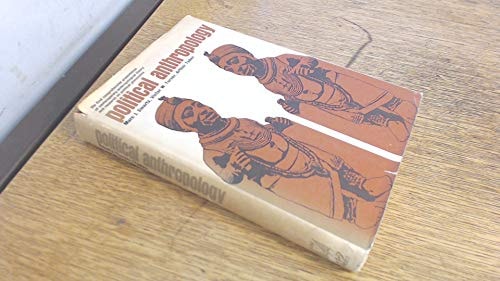
Political Anthropology
0
0
As an Amazon Associate and affiliate partner, Menrva Books earns from qualifying purchases. Learn more
Author Description
Politics: a static network of structural and functional models? Is it a "given" set of rules, statuses and procedures? Or a dynamic process, a continuum related to the past as well as to the present and continually influenced by pressures within and outside of a society? Taking the latter view of the nature of political behavior, the editors of Political Anthropology here present an original compilation of papers that thoroughly assess contemporary anthropological research and theory on political phenomena and explore the sources and maintenance of political power. One of the aims of this book is to take tentative steps toward resolving the developing crisis by investigating the structure of political action revealed in empirical data. Within the general framework of political dynamics the book uses processes such as decision making, the judicial process, the disturbance and settlement of policy issues, the application of sanctions, and the outcome of disputes among other things. These items will find their places as components of phases in the major sequence. Investigating societies from Africa to Alaska, politics is shown to be a global phenomenon--a "human process of action" centering on the conflict between the "common good" and "interests of groups," and on the resolution or extension of that conflict by the religious, structural, sociocultural, and psychological pressures within and external to a social grouping. Essential reading for anyone concerned with the nature of political process, Political Anthropology presents a fresh, important and comprehensive overview of the "wind of change" currently abroad in the study of political behavior.
Menrva's Summary
THE THESIS
This volume investigates whether political systems function as static structural models or as dynamic, evolving processes influenced by internal and external societal pressures. The editors, including Victor W. Turner, compile original research to challenge traditional views of political behavior. By analyzing empirical data from diverse global societies, the text argues that political power is maintained through a complex interplay of decision-making, judicial processes, and sociocultural conflict resolution.
THE SCOPE MAP
What You Will Find
- Comparative analysis of political systems across diverse global regions, including Africa and Alaska.
- Methodological frameworks for observing political dynamics such as dispute settlement and sanction application.
- Empirical case studies focusing on the tension between the common good and group interests.
- Theoretical exploration of how religious, structural, and psychological pressures shape political action.
THE AUTHORITY PERSPECTIVE
Experts recognize this collection as a significant contribution to the shift toward process-oriented political anthropology. Readers frequently note the academic density of the prose, which serves as a foundational text for students and researchers examining the mechanics of political behavior.
Page Count:
317
Publication Date:
2020-10-12
Publisher:
Routledge
ISBN-10:
0202010260
ISBN-13:
9780202010267
Anthropology
Political Anthropology
Sociology
Social Science
Power Social sciences
Community Tags
Other Editions(3)

Similar Books










Reader Comments
Share Your Thoughts
No comments yet. Be the first to share your thoughts!