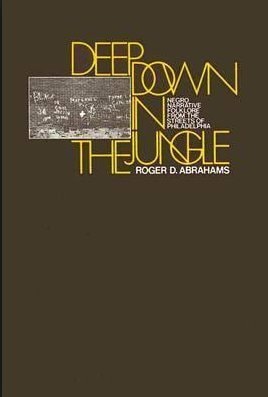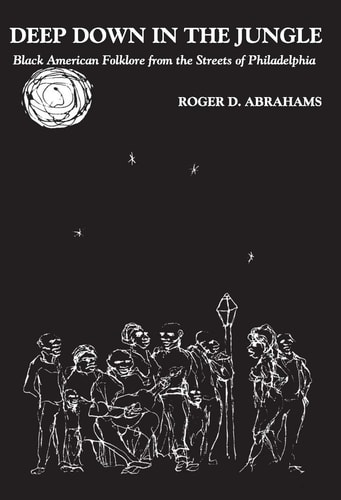
Deep Down in the Jungle: Black American Folklore from the Streets of Philadelphia
0
0
As an Amazon Associate and affiliate partner, Menrva Books earns from qualifying purchases. Learn more
Author Description
With the growth of interest in folklore, it becomes increasingly evident that the presentation of a collection needs some rationale more than the fact that traditional materials have been collected and properly annotated. Much has been gathered and is now accessible through journals, archives, and lists. If a corpus of lore is not presented in some way, which bears new light on the process of word-of-mouth transmission, on traditional forms or expressions, or on the group among whom the lore was encountered, there is little reason to present it to the public. This work represents an attempt to present a body of folklore collected among one small group of Black Americans in a neighborhood in South Philadelphia. The author's approach toward collection and presentation has been intensive. He has tried to collect "in depth," and to recreate in his presentation the social background in which the lore was found, and to relate the lore with the life and the values of the group. Abraham's work is a departure from any past methods of analyzing folklore, and therefore a description of the author's point of view and his method will be given first. The majority of this work was written before his methodology was actually formulated. However throughout the project — the object was to illuminate as fully as possible the lore of one small group of African Americans from urban Philadelphia. The methodology, which developed, did so because of this objective more than anything else. Though the formulation of this theory may seem ex post facto, it is included because it clarified much during the rewritings of this book, and more importantly, because it will clarify many matters for the lay reader and for the professional folklorist.
Menrva's Summary
THE THESIS
This work investigates the social context and transmission processes of Black American folklore within a specific urban community in South Philadelphia. Roger D. Abrahams, a folklorist, utilizes an intensive, in-depth collection method to move beyond simple archival listing. He argues that folklore must be presented alongside the social background and values of the group from which it originates to be properly understood. The book serves as both a collection of traditional materials and a methodological framework for future ethnographic research.
THE SCOPE MAP
What You Will Find
- A collection of oral traditions and folklore gathered from a specific Black American neighborhood in South Philadelphia.
- An intensive ethnographic methodology focused on the social environment of the performers.
- Analysis of the relationship between traditional expressions and the values of the urban group.
- A theoretical framework for the study and presentation of folklore that emphasizes the process of word-of-mouth transmission.
THE AUTHORITY PERSPECTIVE
Experts recognize this text as a significant departure from traditional, purely archival approaches to folklore studies. Readers frequently note the academic density of the prose, which serves as a foundational text for those interested in the intersection of urban sociology and cultural anthropology.
Page Count:
296
Publication Date:
2006-06-15
Publisher:
Routledge
ISBN-10:
0202308472
ISBN-13:
9780202308470
Sociology
Cultural History
Urban Studies
African Americans
Anthropology
Folklore
Community Tags
Similar Books