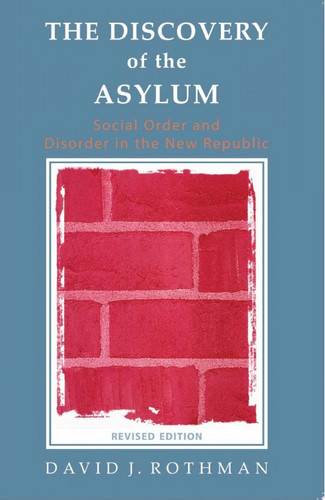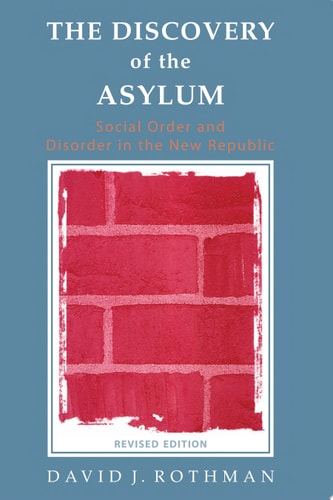
The Discovery of the Asylum
0
0
As an Amazon Associate and affiliate partner, Menrva Books earns from qualifying purchases. Learn more
Author Description
Detailed history of U.S. social control of the criminal, poor, and mentally ill from colonial practices centered on human resources to "the age of the asylum," the Jacksonian era.
Menrva's Summary
THE THESIS
This work investigates the origins and rapid proliferation of the asylum as the primary mechanism for managing deviance in early nineteenth-century America. David J. Rothman, a historian of social policy, examines the transition from colonial-era community-based social control to the institutionalization of the poor, the criminal, and the mentally ill. He argues that the Jacksonian era's reliance on the asylum was not merely a humanitarian response, but a calculated effort to impose order and discipline on a society undergoing rapid transformation. By analyzing primary records from state legislatures and institutional reports, the text outlines how the asylum became the standard solution for social disorder.
THE SCOPE MAP
What You Will Find
- Historical analysis of social control practices from the colonial period through the Jacksonian era.
- Examination of the shift from informal community management to formal institutional confinement.
- Case studies of early penitentiaries, almshouses, and state mental hospitals.
- Theoretical framework regarding the relationship between societal anxiety and the creation of total institutions.
THE AUTHORITY PERSPECTIVE
Historians and sociologists frequently cite this text as a foundational study in the history of institutionalization and social policy. Readers often note the academic density of the prose, which provides a rigorous examination of the structural changes in American social welfare systems.
Page Count:
376
Publication Date:
1971-01-01
Publisher:
Transaction Publishers
ISBN-10:
0202365530
ISBN-13:
9780202365534
History
Psychology
Health
Sociology
Criminology
Social Science