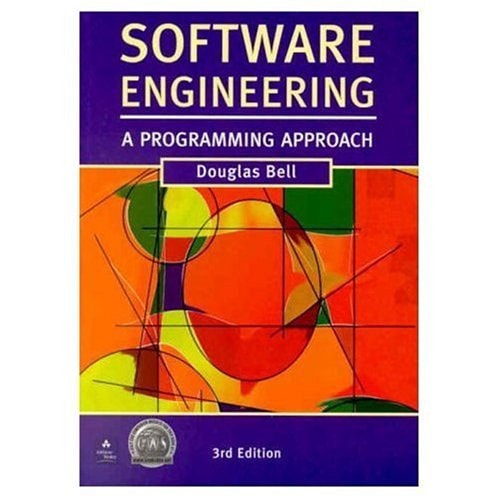
Software Engineering: A Programming Approach
0
0
As an Amazon Associate and affiliate partner, Menrva Books earns from qualifying purchases. Learn more
Author Description
This comprehensive revision continues to build upon the distinctive programming approach that differentiates this book from other software engineering texts in the market. The rationale behind this "bottom-up" approach, one that is much more pragmatic than other software engineering texts, is that students need to understand and be able to apply programming principles before they can contemplate the concepts involved in software engineering.Douglas Bell has updated its content to reflect current trends and new advancements in the field as well as adding new pedagogical features, such as an initial overview of the software process. This will show students how the various topics of software engineering tie together. Includes examples and discussions of Java: UML.
Menrva's Summary
THE THESIS
This text investigates how a bottom-up, programming-centric methodology can effectively bridge the gap between basic coding skills and complex software engineering principles. Douglas Bell, an established educator in computer science, argues that students must master practical programming application before they can successfully synthesize high-level software engineering concepts. The book utilizes a structured pedagogical framework to guide readers through the software development process, ensuring that theoretical knowledge is grounded in tangible coding practice.
THE SCOPE MAP
What You Will Find
- A bottom-up pedagogical framework for software development
- Integration of Java programming examples and UML modeling
- An overview of the software development life cycle
- Practical application of software engineering principles in real-world coding scenarios
THE AUTHORITY PERSPECTIVE
Experts and educators frequently highlight this text as a practical alternative to more abstract, theory-heavy software engineering manuals. Readers note that the focus on Java and UML provides a concrete foundation that is particularly useful for undergraduate students transitioning from introductory programming courses.
Page Count:
368
Publication Date:
2000-01-01
Publisher:
Addison Wesley
ISBN-10:
0202648567
ISBN-13:
9780202648569
textbook
Java
Computer Science
Programming
Software Engineering