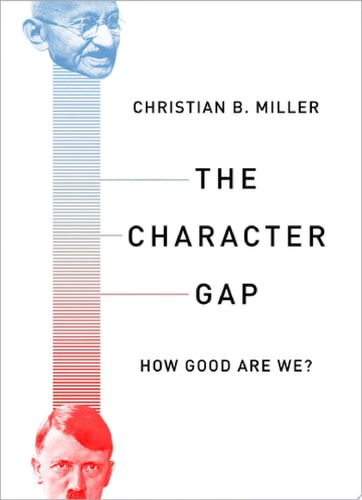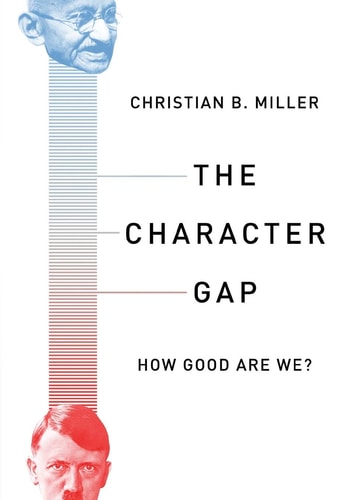
The Character Gap
0
0
As an Amazon Associate and affiliate partner, Menrva Books earns from qualifying purchases. Learn more
Author Description
We Like To Think Of Ourselves, Our Friends, And Our Families As Decent People. We May Not Be Saints, But We Are Still Honest, Relatively Kind, And Mostly Trustworthy. Miller Argues Here That We Are Badly Mistaken In Thinking This. Hundreds Of Recent Studies In Psychology Tell A Different Story: That We All Have Serious Character Flaws That Prevent Us From Being As Good As We Think We Are - And That We Do Not Even Recognize That These Flaws Exist. But Neither Are Most Of Us Cruel Or Dishonest. Instead, Miller Argues, We Are A Mixed Bag. On The One Hand, Most Of Us In A Group Of Bystanders Will Do Nothing As Someone Cries Out For Help In An Emergency. Yet It Is Also True That There Will Be Many Times When We Will Selflessly Come To The Aid Of A Complete Stranger - And Resist The Urge To Lie, Cheat, Or Steal Even If We Could Get Away With It. Much Depends On Cues In Our Social Environment. Miller Uses This Recent Psychological Literature To Explain What The Notion Of Character Really Means Today, And How We Can Use This New Understanding To Develop A Character Better In Sync With The Kind Of People We Want To Be.
Menrva's Summary
THE THESIS
The central question investigates whether human beings are inherently virtuous or if psychological evidence suggests our character is fundamentally flawed and inconsistent. Christian B. Miller, a professor of philosophy, synthesizes extensive psychological research to challenge the common perception of human moral consistency. He argues that most individuals exist in a state of moral ambiguity, where behavior is heavily dictated by situational cues rather than stable character traits. The book provides a framework for understanding these limitations while offering strategies for individuals to cultivate more reliable moral habits.
THE SCOPE MAP
What You Will Find
- Analysis of psychological studies regarding bystander intervention and honesty.
- A philosophical re-evaluation of the concept of character traits.
- Practical strategies for moral self-improvement based on environmental awareness.
Scope Limits
- The text does not provide a comprehensive history of moral philosophy.
- It does not offer a clinical guide for treating personality disorders.
THE AUTHORITY PERSPECTIVE
Experts in the field of moral psychology note that the book successfully bridges the gap between empirical data and philosophical inquiry. Readers frequently highlight the accessible tone of the prose, which manages to explain complex psychological studies without sacrificing academic rigor.
Page Count:
288
Publication Date:
2017-01-01
Publisher:
Oxford University Press
ISBN-10:
0190264233
ISBN-13:
9780190264239
Philosophy
Psychology
Behavioral Science
Ethics
Community Tags
Similar Books