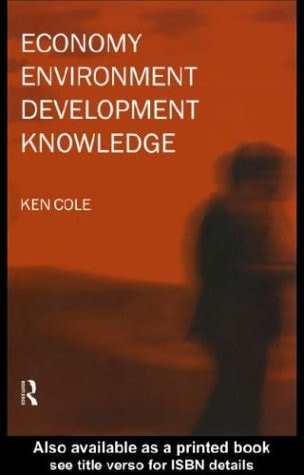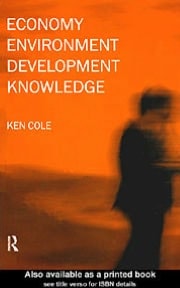
Economy, Environment, Development, Knowledge
0
0
As an Amazon Associate and affiliate partner, Menrva Books earns from qualifying purchases. Learn more
Author Description
As we approach the end of the second millennium, we find ourselves in times of radical social change. Orthodox explanations of the economy, the environment and the development process are unable to provide coherent policies for such issues as employment creation, environmental degradation and social progress. Economy-Environment-Development-Knowledge provides alternative perspectives on these fundamental aspects of human existence. Economists, environmentalists, and development theorists have so far been unable to agree on the most successful prescriptions to address problems. To understand, contrast and compare alternative understandings of economic, environmental and development issues, we need to be aware why theorists conceptualise the process of social experience so differently. Part 1 of Economy-Environment-Development-Knowledge addresses the subjective preference, cost-of-production and abstract labour theories of values in economics; Part 2 explains egocentrism, ecocentrism and socioecocentrism as competing theoretical perspectives in environmental theory; Part 3 highlights modernisation theory, structuralist theory and class struggle as ways to account for the process of development and Part 4 examines the generation of knowedge through positivism, paradigms and praxis, legitimating competing perspectives in economics, environmentalist and development. The book concludes by considering why different people find alternative explanations more or less plausible. By addressing the disagreements between theorists, Economy-Environment-Development-Knowledge provides a unique basis to contrast and compare the plethora of theories of, and policies for, economic prosperity, environmental sustainability and social progress.
Menrva's Summary
THE THESIS
This work investigates why orthodox economic, environmental, and development theories fail to provide coherent policy solutions for contemporary social challenges. Ken Cole, an expert in development and political economy, argues that the inability to address issues like employment and environmental degradation stems from fundamental disagreements in how theorists conceptualize social experience. By deconstructing the underlying values and paradigms of these fields, the book provides a framework for understanding why competing theories exist and how they shape policy outcomes.
THE SCOPE MAP
What You Will Find
- Comparative analysis of value theories including subjective preference, cost-of-production, and abstract labour.
- Examination of environmental perspectives categorized into egocentrism, ecocentrism, and socioecocentrism.
- Evaluation of development frameworks such as modernisation theory, structuralist theory, and class struggle.
- Methodological critique of knowledge generation through positivism, paradigms, and praxis.
THE AUTHORITY PERSPECTIVE
Experts recognize this text as a valuable synthesis for students and practitioners seeking to navigate the fragmented landscape of social and economic theory. Readers frequently note the academic density of the prose, which is best suited for those already familiar with the foundational debates in political economy and environmental policy.
Page Count:
320
Publication Date:
1999-01-01
Publisher:
Taylor & Francis, Inc.
ISBN-10:
0203015126
ISBN-13:
9780203015124
Economics
Green Business
Nature
Social Science
Nonfiction