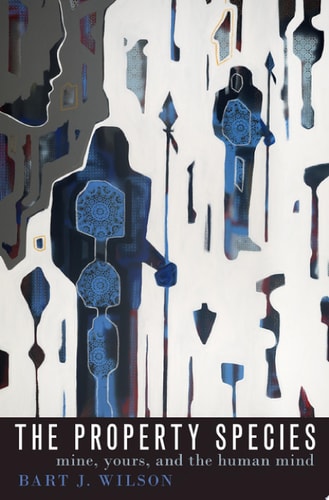
The Property Species: Mine, Yours, and the Human Mind
0
0
As an Amazon Associate and affiliate partner, Menrva Books earns from qualifying purchases. Learn more
Author Description
What is property, and why does our species have it? In The Property Species, Bart J. Wilson explores how humans acquire, perceive, and know the custom of property, and why this might be relevant to understanding how property works in the twenty-first century. Arguing that neither the sciences nor the humanities synthesizes a full account of property, the book offers a cross-disciplinary compromise that is sure to be controversial: Property is a universal and uniquely human custom. Integrating cognitive linguistics with philosophy of property and a fresh look at property disputes in the common law, the book makes the case that symbolic-thinking humans locate the meaning of property within a thing. That is, all human beings and only human beings have property in things, and at its core, property rests on custom, not rights. Such an alternative to conventional thinking contends that the origins of property lie not in food, mates, territory, or land, but in the very human act of creating, with symbolic thought, something new that did not previously exist. Written by an economist who marvels at the natural history of humankind, the book is essential reading for experts and any reader who has wondered why people claim things as "Mine!", and what that means for our humanity.
Menrva's Summary
THE THESIS
This book investigates the fundamental origins of property as a uniquely human custom, questioning why our species perceives and claims ownership over things. Bart J. Wilson, an economist, synthesizes insights from cognitive linguistics, the philosophy of property, and common law to argue that property is not merely a legal construct or a resource-based necessity. Instead, he posits that property emerges from the human capacity for symbolic thought and the act of creation, suggesting that the concept of 'Mine!' is rooted in custom rather than inherent rights.
THE SCOPE MAP
What You Will Find
- An analysis of property as a universal human custom rather than a product of resource scarcity.
- Integration of cognitive linguistics and symbolic thinking frameworks.
- Examination of property disputes within the context of common law.
Scope Limits
- The book does not focus on the political or legislative history of modern property rights.
- It does not provide a comprehensive guide to contemporary real estate or intellectual property law.
THE AUTHORITY PERSPECTIVE
Experts and readers note that the text provides a provocative, interdisciplinary challenge to conventional economic and legal theories regarding ownership. The prose is considered accessible to those interested in the intersection of human evolution and social norms, though it remains dense with philosophical and linguistic inquiry.
Page Count:
258
Publication Date:
2020-01-01
Publisher:
Oxford University Press
ISBN-10:
0190936819
ISBN-13:
9780190936815
Philosophy
Economics
Customs & Traditions
Anthropology
Law
Consumer Behavior
Social Science
Professional Career & Trade
Cultural Anthropology
Community Tags
Similar Books