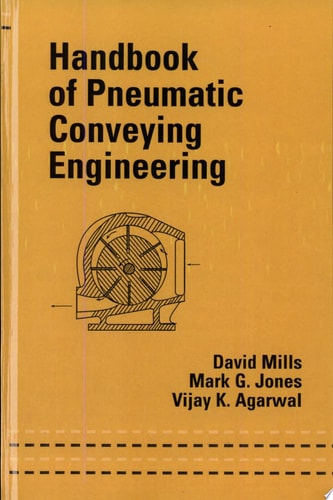
Handbook of Pneumatic Conveying Engineering
0
0
As an Amazon Associate and affiliate partner, Menrva Books earns from qualifying purchases. Learn more
Author Description
Pneumatic conveying systems offer enormous advantages: flexibility in plant layout, automatic operation, easy control and monitoring, and the ability to handle diverse materials, especially dangerous, toxic, or explosive materials. The Handbook of Pneumatic Conveying Engineering provides the most complete, comprehensive reference on all types and sizes of systems, considering their selection, design, maintenance, and optimization. It offers practical guidelines, diagrams, and procedures to assist with plant maintenance, operation, and control. With well over fifty years of combined experience in the field, the authors promote practical, valuable approaches to test, evaluate, and correct both old and newly constructed systems. They include abundant checklists and approaches for preventing component wear, material degradation, and operating dilemmas and suggest lists of alternate materials and components to use if erosion does occur. Comparing various conveying system types, components, and flow mechanisms, the book explains the function of material flow, recommends conveying air velocity for different types of materials, and examines the conveying characteristics of a broad array of materials with emphasis on their impact on system performance. Brimming with invaluable checklists, models, guidelines, diagrams, and illustrations, the Handbook of Pneumatic Conveying Engineering is simply the most authoritative guide to pneumatic conveying available and a critical tool for your everyday work.
Menrva's Summary
THE THESIS
This handbook investigates the technical requirements, operational challenges, and optimization strategies necessary for the effective design and maintenance of pneumatic conveying systems. The authors, David Mills, Mark G. Jones, and Vijay K. Agarwal, leverage over fifty years of combined industry experience to provide a comprehensive framework for managing material flow. By synthesizing theoretical models with practical engineering data, the text serves as a reference for selecting, evaluating, and correcting both legacy and modern industrial systems.
THE SCOPE MAP
What You Will Find
- Detailed analysis of system selection, design, maintenance, and optimization protocols.
- Practical guidelines for managing material degradation, component wear, and erosion.
- Comparative data on various conveying system types and flow mechanisms.
- Extensive checklists, diagrams, and illustrations for daily operational troubleshooting.
THE AUTHORITY PERSPECTIVE
Experts recognize this volume as a foundational reference for engineers tasked with the design and upkeep of pneumatic transport infrastructure. Readers frequently note the technical density of the prose, which provides actionable data for complex industrial applications.
Page Count:
720
Publication Date:
2004-01-01
Publisher:
Taylor & Francis Group
ISBN-10:
0203021983
ISBN-13:
9780203021989
Engineering
Reference
Industrial Technology
Community Tags
Other Editions(3)


Similar Books










Reader Comments
Share Your Thoughts
No comments yet. Be the first to share your thoughts!