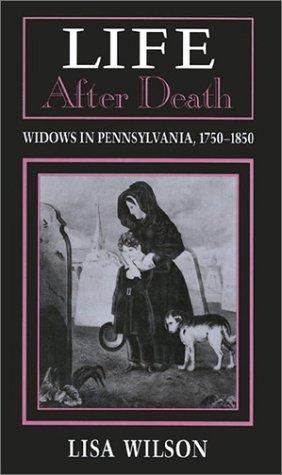
Life after Death
0
0
As an Amazon Associate and affiliate partner, Menrva Books earns from qualifying purchases. Learn more
Author Description
Lisa Wilson traces the experiences of widows in a society that was developing a new ideology of proper female behavior. Using wills, court records, almshouse registers, correspondence, and diaries to explore the lives of widows during this period, Wilson alters our understanding of the diversity of women's experiences and adds a new dimension to the "separate spheres" explanation of gender roles. For this group of early American women, family concerns rather than the dictates of femininity lay at the core of their lives. The focus of this study, Chester County and Philadelphia between 1750 and 1850, provides a backdrop from which many types of widowed women can be observed. Philadelphia during this time was a growing urban center. With this growth came economic change and the beginning of industrialization. In Chester County, the traditional, family-centered farms remained crucial to the community, and yet small towns were beginning to emerge in the countryside. This study focuses on both city and country to better understand the circumstances of widows in two unique economic and social environments. Wilson contends that, despite the dictates of their gender, women had an active role to play within their families and within marriage. Her research shows that some women were involved in financial planning and management throughout their marriages and that their husbands' wills reveal an expectation of trust that their wives would exercise good judgment in maintaining the family property. While carrying on business activities outside the home challenged prevailing ideas of femininity, Wilson demonstrates that, for a widow, this concern was often secondary to the primary needs of her family.--Jacket.
Menrva's Summary
THE THESIS
of this book is that the experiences of widows in early America reveal a more complex reality of women's lives than traditional historical explanations allow.** Lisa Wilson's study, focusing on Chester County and Philadelphia between 1750 and 1850, utilizes a range of primary sources including wills, court records, and personal correspondence to challenge the notion of rigidly defined
THE SCOPE MAP
- An examination of widowhood in early America, specifically in Chester County and Philadelphia from 1750 to 1850.
- Analysis of primary source documents such as wills, court records, almshouse registers, correspondence, and diaries.
- Exploration of the diversity of women's experiences beyond the concept of "separate spheres."
- A re-evaluation of the role of family concerns versus prescribed femininity in the lives of widows.
- Insights into how economic changes and industrialization in urban Philadelphia and traditional farm life in Chester County impacted widows.
- Evidence of women's active roles in financial planning and management, both within and outside the home.
THE AUTHORITY PERSPECTIVE
This historical study is recognized for its meticulous research and its significant contribution to understanding gender roles in early America. By drawing on a wide array of primary sources, Wilson effectively demonstrates the agency and multifaceted lives of widows, challenging established historical narratives. The book is noted for its nuanced portrayal of how family needs often superseded societal expectations of femininity for these women. Its focus on both urban and rural settings provides a comprehensive view of widowhood during a period of considerable social and economic transformation.
Page Count:
215
Publication Date:
1992-01-01
ISBN-10:
0877228833
Non-Fiction
History
American History
Social History
Community Tags
Similar Books