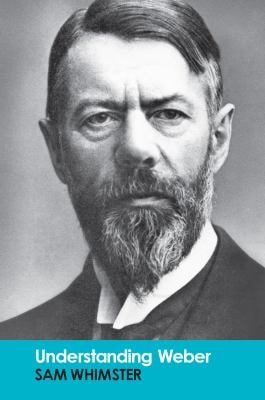
Understanding Weber
0
0
As an Amazon Associate and affiliate partner, Menrva Books earns from qualifying purchases. Learn more
Author Description
Understanding Weber provides an accessible and comprehensive explanation of the central issues of Weber's work. Using the most recent scholarship and editions of Weber's writings, Sam Whimster establishes the full range, depth and development of Max Weber's approach to the social and cultural sciences. This ground-breaking book: locates the central issues in Weber's writings and relates them to the golden era of social and cultural sciences argues that Weber remains the major exponent of the classical tradition still relevant today offers a new interpretation of the dynamic of Weber’s career as historian, social-economist, methodologist and sociologist. Weber's sociology still stands as a successful and valid underwriting of the substantive fields of power, law, rulership, culture, religion, civilizational configurations, and economic sociology. At a time of the turning away from grand theory to empirical policy studies, this book asserts the authority of Weber's conception and calls for a critical engagement with his legacy in order to understand the dynamics of a globalizing modernity. This is an indispensable guide to Weber's writings and will be an invaluable companion to The Essential Weber (2004). The book closely tracks the development of Weber’s thinking, an exploration that will make it an obligatory choice for undergraduate and postgraduate students as well as researchers in the fields of sociological theory, economic sociology and cultural studies.
Menrva's Summary
THE THESIS
This book investigates the core intellectual contributions of Max Weber to determine his ongoing relevance within the modern social and cultural sciences. Dr. Sam Whimster, a noted scholar of Weberian thought, utilizes contemporary scholarship and primary texts to map the evolution of Weber's career. The work argues that Weber's methodology and substantive theories regarding power, law, and religion remain foundational for analyzing the complexities of globalizing modernity. By situating Weber within the classical tradition, the author provides a framework for understanding the transition from historical social-economics to contemporary empirical policy studies.
THE SCOPE MAP
What You Will Find
- A comprehensive analysis of Weber's development as a historian, methodologist, and sociologist.
- Detailed examinations of substantive fields including power, law, rulership, culture, and religion.
- A critical synthesis of Weber's writings in relation to the golden era of social science.
- Methodological tools for engaging with Weber's legacy in the context of modern economic sociology.
THE AUTHORITY PERSPECTIVE
Experts and academics recognize this text as a primary resource for students and researchers navigating the complexities of Weberian theory. Readers frequently note the clarity with which the author synthesizes dense historical and sociological concepts for both undergraduate and postgraduate study.
Page Count:
256
Publication Date:
2007-01-01
Publisher:
Taylor & Francis Group
ISBN-10:
0415370752
ISBN-13:
9780203030561
Economics
Religion
Philosophy
Sociology
Economic History
Religion and sociology
Social Science
Community Tags
Similar Books