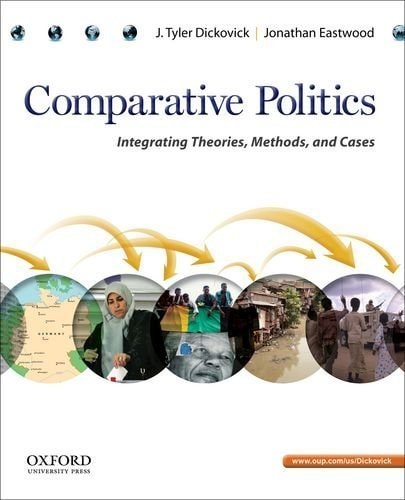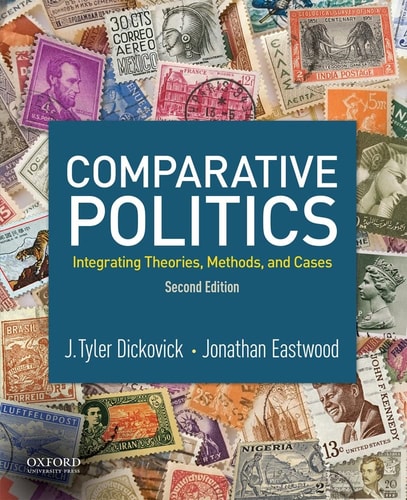
Comparative Politics: Integrating Theories, Methods, and Cases
0
0
As an Amazon Associate and affiliate partner, Menrva Books earns from qualifying purchases. Learn more
Author Description
Why do countries have different institutions and forms of government? Why do some social revolutions succeed and endure while others fail? Why are some societies subjected to terrorism and not others? An engaging and accessible introduction to the subject, Comparative Politics: Integrating Theories, Methods, and Cases, Second Edition, gives students the methodological tools they need to answer the "big questions" in the field. The authors introduce methods early in the text and integrate them throughout in order to help students develop a systematic way of thinking about comparative politics.FEATURES^* A unique structure offers the best of thematic and country-by-country approaches. Sixteen succinct thematic chapters--organized around the "big questions" in the field--are followed by a separate section at the end of the book offering full-length profiles and case studies for twelve countries* Each chapter integrates several standalone country case studies in "Case in Context" boxes; these features tie into the narrative, pose questions, and point students to the full case discussions in the country profiles* "Thinking Comparatively" sections at the end of each chapter introduce new methodological tools and help students apply the theories and concepts covered in that chapter* "Thinking It Through" questions help students test their ability to apply comparative politics theories to cases* "Research Prompts" in every case-study section help students develop comparative projects and papers
Menrva's Summary
THE THESIS
This text investigates the fundamental reasons behind the variation in political institutions, social stability, and governance across different nations. Authors Jonathan Eastwood and J. Tyler Dickovick provide a structured pedagogical framework that combines theoretical inquiry with methodological rigor. By introducing analytical tools early, the authors enable students to systematically evaluate complex political phenomena and address core questions within the field of comparative politics.
THE SCOPE MAP
What You Will Find
- Sixteen thematic chapters addressing central questions in political science
- Twelve full-length country profiles and case studies
- Integrated "Case in Context" boxes and "Thinking Comparatively" methodological exercises
- Research prompts designed for student project development
Scope Limits
- The text focuses on foundational comparative frameworks rather than exhaustive historical accounts of every global nation
- It prioritizes methodological application over speculative political theory
THE AUTHORITY PERSPECTIVE
Instructors and students frequently highlight the text's effective balance between thematic analysis and specific country case studies. The academic community views this as a highly accessible introduction that successfully bridges the gap between abstract political theory and practical research methodology.
Page Count:
672
Publication Date:
2015-07-15
Publisher:
Oxford University Press
ISBN-10:
0190270993
ISBN-13:
9780190270995
Comparative Government
International relations
Academic Textbooks
Government
Comparative Politics
Community Tags
Similar Books