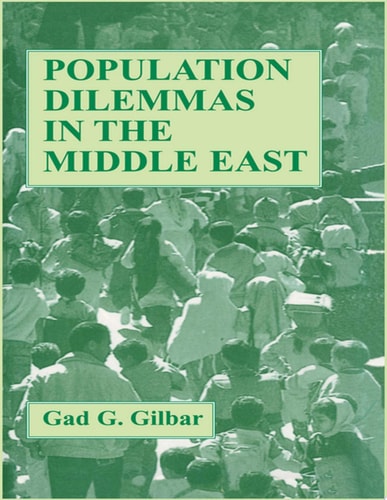
Population Dilemmas in the Middle East
0
0
As an Amazon Associate and affiliate partner, Menrva Books earns from qualifying purchases. Learn more
Author Description
This study first offers a general outline of Palestinian population growth between 1948 and 1987, and then focuses on the town of Nablus in the early 1950s for a detailed analysis of the economic forces that instigated Palestinian migration to Jordan and the Gulf. The author shows how the recession that struck the Arab oil economies in the early 1980s, by slowing down the migratory movement, shut off the valve that had afforded the Palestinians in the West Bank and Gaza relief from economic pressures. When during those same years the Israeli government instigated a policy of reducing investments in these territories, the Palestinians found themselves in a no-win situation, with their economic plight forming one of the main factors for the eruption of the Intifada in December 1987. Finally, following Iraq's invasion of Kuwait in July 1990, most of the 300,000 or so Palestinians who had been working there left (or were forced to leave) and made their way to Jordan. The author analyses how Jordan, in coping with the resulting demographic and economic pressures, adopted an antinatalist policy despite powerful political and social forces working against such a programme.
Menrva's Summary
THE THESIS
This study investigates the correlation between Palestinian population growth, regional economic shifts, and the subsequent political instability in the Middle East during the late 20th century. Gad G. Gilbar, a scholar specializing in the economic history of the Middle East, utilizes demographic data and economic analysis to argue that the cessation of labor migration opportunities, combined with restrictive investment policies, served as a primary catalyst for the 1987 Intifada. The work provides a framework for understanding how demographic pressures and external economic shocks forced states like Jordan to adopt controversial population management policies.
THE SCOPE MAP
What You Will Find
- Demographic analysis of Palestinian population growth between 1948 and 1987.
- Case study of economic conditions in Nablus during the early 1950s.
- Examination of the impact of the 1980s oil economy recession on labor migration.
- Analysis of Jordan's antinatalist policy responses to the influx of displaced workers following the 1990 Gulf crisis.
THE AUTHORITY PERSPECTIVE
Experts recognize this work as a significant contribution to the study of Palestinian economic history and regional demographic trends. Readers frequently note the academic density of the prose and the author's precise use of historical data to explain complex geopolitical outcomes.
Page Count:
160
Publication Date:
2012-01-01
Publisher:
Taylor & Francis Group
ISBN-10:
0203044231
ISBN-13:
9780203044230
Economics
Science
History
Social Science
Middle East
Demography
Community Tags
Other Editions(4)


Similar Books