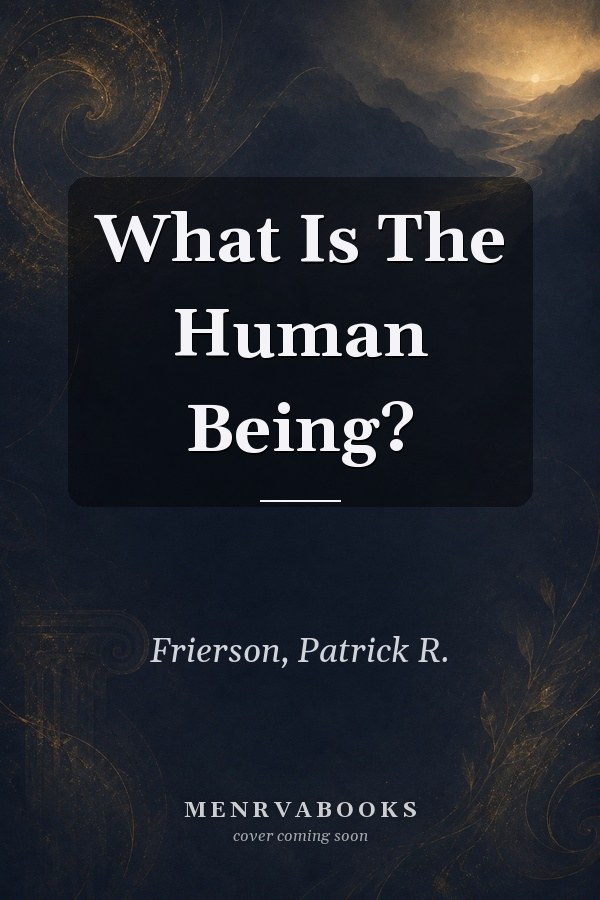
What Is The Human Being?
Author Description
Philosophers, Anthropologists And Biologists Have Long Puzzled Over The Question Of Human Nature. It Is Also A Question That Kant Thought About Deeply And Returned To In Many Of His Writings. In This Lucid And Wide-ranging Introduction To Kant's Philosophy Of Human Nature - Which Is Essential For Understanding His Thought As A Whole - Patrick R. Frierson Assesses Kant's Theories And Examines His Critics. He Begins By Explaining How Kant Articulates Three Ways Of Addressing The Question 'what Is The Human Being?': The Transcendental, The Empirical, And The Pragmatic. He Then Considers Some Of The Great Theorists Of Human Nature Who Wrestle With Kant's Views, Such As Hegel, Marx, Darwin, Nietzsche, And Freud; Contemporary Thinkers Such As E.o.wilson And Daniel Dennett, Who Have Sought Biological Explanations Of Human Nature; Thomas Kuhn, Michel Foucault, And Clifford Geertz, Who Emphasize The Diversity Of Human Beings In Different Times And Places; And Existentialist Philosophers Such As Sartre And Heidegger. He Argues That Whilst These Approaches Challenge And Enrich Kant's Views In Significant Ways, All Suffer From Serious Weaknesses That Kant's Anthropology Can Address. Taking A Core Insight Of Kant's - That Human Beings Are Fundamentally Free But Finite - He Argues That It Is The Existentialists, Particularly Sartre, Who Are The Most Direct Heirs Of His Transcendental Anthropology. The Final Part Of The Book Is An Extremely Helpful Overview Of The Work Of Contemporary Philosophers, Particularly Christine Korsgaard And Jürgen Habermas. Patrick R. Frierson Explains How These Philosophers Engage With Questions Of Naturalism, Historicism, And Existentialism While Developing Kantian Conceptions Of The Human Being.
Menrva's Summary
THE THESIS
This book investigates the core question of human nature by synthesizing Immanuel Kant's multifaceted philosophical framework with subsequent historical and contemporary critiques. Patrick R. Frierson, a scholar of Kantian philosophy, utilizes Kant's tripartite division of the human being—transcendental, empirical, and pragmatic—to evaluate how modern thinkers have grappled with the tension between human freedom and biological or historical finitude. The text argues that while various intellectual traditions offer significant insights, Kant's original anthropological project remains uniquely capable of addressing the inherent weaknesses found in later theories.
THE SCOPE MAP
What You Will Find
- A detailed breakdown of Kant's three-part approach to human nature: transcendental, empirical, and pragmatic.
- Comparative analyses between Kantian thought and major figures including Hegel, Marx, Darwin, Nietzsche, and Freud.
- Evaluations of contemporary scientific naturalism as represented by E.O. Wilson and Daniel Dennett.
- A critical examination of existentialist perspectives, specifically focusing on the work of Sartre and Heidegger.
- An overview of modern Kantian developments in the work of Christine Korsgaard and Jürgen Habermas.
THE AUTHORITY PERSPECTIVE
Experts identify this work as a clear and accessible entry point for students seeking to understand the intersection of Kantian philosophy and modern anthropological debates. Readers frequently note the academic density of the prose, which serves as a rigorous guide for those already familiar with the basics of Enlightenment philosophy.
Page Count:
0
Publication Date:
2013-01-01
Publisher:
Routledge
ISBN-10:
0415558441
ISBN-13:
9780203070314
Non-Fiction
Philosophy
Human beings
Metaphysics
Ethics
Philosophical anthropology
Anthropology
Community Tags
Similar Books