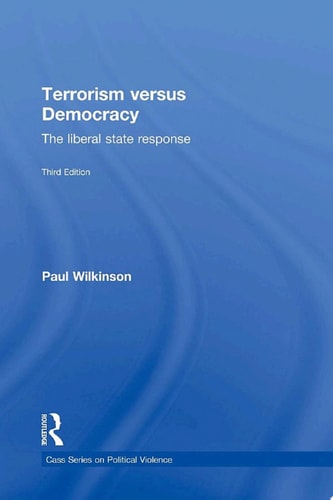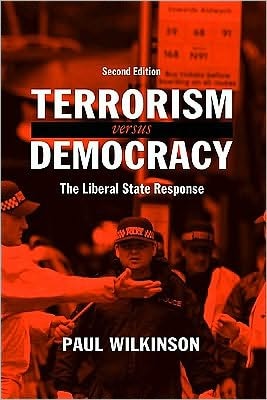
Terrorism Versus Democracy
0
0
As an Amazon Associate and affiliate partner, Menrva Books earns from qualifying purchases. Learn more
Author Description
No one understands terrorism better than Paul Wilkinson...if policy makers read this book they will understand the problems better. If terrorists read it they will understand themselves a lot better. - Michael Clarke, King’s College London, University of London, UKThis acclaimed study examines both the new terror networks and those that have been around for decades. This new edition brings it up-to-date with the dramatic opening of the twenty-first century, with new chapters on the 9/11 attacks, the growth of international terrorism, the Al Qaeda network and the War on Terror.This text provides us with some much needed criteria for distinguishing between terrorists and freedom fighters and an explanation of the uses of terrorism as a political, social, religious and criminal weapon. Wilkinson also links the use of terrorism to a wider repertoire of struggle. He proposes a variety of possible counter-measures and valuable principles carefully distilled from the recent past to help design a response that is compatible with democratic principles, the rule of law and respect for human rights.This book is essential reading for undergraduate and postgraduate students of terrorism studies, political science and international relations, as well as for policy makers and journalists.
Menrva's Summary
THE THESIS
This work investigates the fundamental tension between the preservation of democratic institutions and the existential threat posed by modern international terrorism. Paul Wilkinson, a recognized authority in the field of terrorism studies, utilizes historical analysis and contemporary case studies to evaluate how states can effectively counter extremist violence without compromising the rule of law or human rights. The text provides a rigorous framework for identifying the motivations behind terrorist acts and proposes strategic policy responses grounded in democratic governance.
THE SCOPE MAP
What You Will Find
- Analysis of the evolution of international terror networks including Al Qaeda.
- Examination of the 9/11 attacks and their impact on global security policy.
- Criteria for distinguishing between terrorist actors and freedom fighters.
- Strategic principles for counter-terrorism measures that align with human rights.
THE AUTHORITY PERSPECTIVE
Experts and academics frequently cite this work as a foundational text for students of political science and international relations. Readers often note the clarity of the author's arguments regarding the balance between security imperatives and democratic principles.
Page Count:
272
Publication Date:
2006-01-01
Publisher:
Taylor & Francis, Inc.
ISBN-10:
020308733X
ISBN-13:
9780203087336
History
Science
Political Theory
Terrorism - Policy & Prevention
Politics & Government
International relations
Security Studies
Liberalism & Conservatism