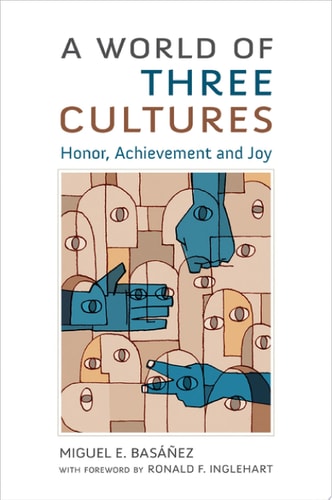
A World of Three Cultures
0
0
As an Amazon Associate and affiliate partner, Menrva Books earns from qualifying purchases. Learn more
Author Description
In This Book, Miguel Basáñez Presents A Provocative Look At The Impact Of Culture On Global Development. Drawing On Data From Governments, Ngos, The World Values Survey And More Addressing Over One Hundred Countries, He Argues That Values, As The Building Blocks Of Culture, Are Directly Related To The Speed With Which Social, Cultural And Economic Development Occurs. Basáñez Utilizes Quantitative Survey Data To Delineate Three Cultural Hyperclusters Across The Globe: Cultures Of Honor, Which Prioritize Political Authority; Cultures Of Achievement, Which Emphasize Economic Advancement; And Cultures Of Joy, Which Focus On Social Interactions. According To Basáñez, These Cultures Evolved Chronologically, Mirroring The Development Of Agrarian, Industrial And Service Societies. He Argues That A Country's Developmental Path Is Profoundly Influenced By Its People's Values And Culture, As Crystallized Through Its Formal And Informal Governing Institutions. Culture Is Passed Down Over Generations Through Families, Schools, The Media, Religious Institutions, Leadership, And The Law. Although Culture And Values Are In A Permanent State Of Evolution, Leaders And Policymakers Can Also Push Cultural Change In Order To Promote Desirable Goals Such As Economic Growth, Democratization, And Equality. Over The Course Of The Book, Basáñez Introduces Two New Measures Of Development: The Objective Development Index (which Blends Rubrics Such As Health, Education, Income, Gender Equality, Political Rights And Civil Liberties, And Economic Inequality) And The Subjective Development Index (which Uses Responses To The World Values Survey To Classify Countries According To Their Values).
Menrva's Summary
THE THESIS
This book investigates the causal relationship between cultural values and the trajectory of global social, political, and economic development. Miguel E. Basáñez, a scholar with extensive experience in international development and survey research, utilizes longitudinal data from the World Values Survey to construct a framework for understanding societal evolution. He argues that cultural values act as the primary determinants of institutional success and that these values can be categorized into three distinct hyperclusters that correspond to different stages of societal advancement.
THE SCOPE MAP
What You Will Find
- A comparative analysis of over one hundred countries using quantitative survey data.
- The classification of cultures into three hyperclusters: Honor, Achievement, and Joy.
- The introduction of the Objective Development Index and the Subjective Development Index as analytical tools.
Scope Limits
- The text does not provide a comprehensive history of every individual nation mentioned.
- The analysis focuses primarily on macro-level cultural trends rather than micro-level psychological case studies.
THE AUTHORITY PERSPECTIVE
Scholars and policy analysts frequently cite this work for its ambitious attempt to quantify cultural variables in economic development. Experts note that while the framework is highly structured, the broad generalizations regarding cultural hyperclusters invite ongoing debate among sociologists and political scientists.
Page Count:
272
Publication Date:
2015-01-01
Publisher:
Oxford University Press
ISBN-10:
0190270381
ISBN-13:
9780190270384
Economics
Global Affairs
Sociology
Community Tags
Similar Books