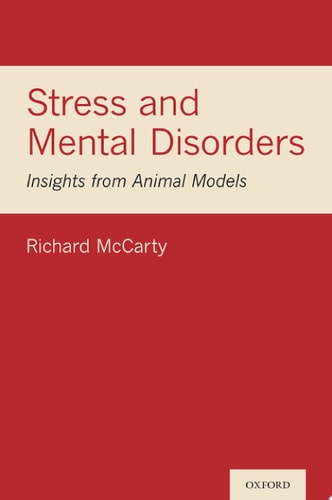
Stress and Mental Disorders: Insights from Animal Models
0
0
As an Amazon Associate and affiliate partner, Menrva Books earns from qualifying purchases. Learn more
Author Description
Stress has been recognized as an important factor in the development or recurrence of various mental disorders, from major depressive disorder to bipolar disorder to anxiety disorders. Stressful stimuli also appear to exert their effects by acting upon individuals with susceptible genotypes. Over the past 50 years, animal models have been developed to study these dynamic interactions between stressful stimuli and genetically susceptible individuals during prenatal and postnatal development and into adulthood. Stress and Mental Disorders: Insights from Animal Models begins with a discussion of the history of psychiatric diagnosis and the recent goal of moving toward precision psychiatry, followed by a review of clinical research on connections between stressful stimuli and the development of psychiatric disorders. Chapters are also included on neuroendocrine, immune, and brain systems involved in responses to stress. Additional chapters focus on the development of animal models in psychiatry and the susceptibility of the developing organism to stressful stimuli. Subsequent chapters are devoted to animal models of specific stress-sensitive psychiatric disorders, including schizophrenia, autism spectrum disorders, bipolar disorder, anxiety disorders, depression, and post-traumatic stress disorder. These chapters also focus on identification of promising molecular targets for development of new drug therapies. The section concludes with a chapter on animal models of resilience to stress-induced behavioral alterations as a newer approach to understanding why some animals are susceptible to stress and others are resilient, even though they are essentially genetically identical. The final chapter discusses how these basic laboratory studies are providing promising leads for future breakthroughs in the diagnosis, treatment, and prevention of mental disorders.
Menrva's Summary
THE THESIS
This book investigates the complex interplay between stressful stimuli and genetic susceptibility in the etiology of various mental disorders. Author Richard McCarty synthesizes five decades of research using animal models to bridge the gap between basic laboratory findings and the clinical goal of precision psychiatry. The text provides a framework for understanding how neuroendocrine, immune, and brain systems mediate stress responses across different developmental stages.
THE SCOPE MAP
What You Will Find
- Historical overview of psychiatric diagnosis and the shift toward precision medicine
- Analysis of neuroendocrine and immune system involvement in stress pathology
- Examination of specific animal models for schizophrenia, autism, bipolar disorder, and PTSD
- Discussion on molecular targets for future pharmacological interventions
Scope Limits
- The text focuses primarily on laboratory-based animal research rather than human clinical trials
- It does not provide a comprehensive guide to therapeutic interventions for human patients
THE AUTHORITY PERSPECTIVE
Experts recognize this work as a comprehensive synthesis of the current state of preclinical psychiatric research. Readers frequently note the academic density of the prose, which serves as a technical resource for researchers and students in the fields of neuroscience and behavioral biology.
Page Count:
672
Publication Date:
2020-01-01
Publisher:
Oxford University Press
ISBN-10:
0190697288
ISBN-13:
9780190697280
Psychology
Stress Physiology
Neuroscience
Allied Health
Psychiatry
Animal models
Mental Health
Medical research
Medical
Community Tags
Other Editions(2)
Similar Books






Reader Comments
Share Your Thoughts
No comments yet. Be the first to share your thoughts!